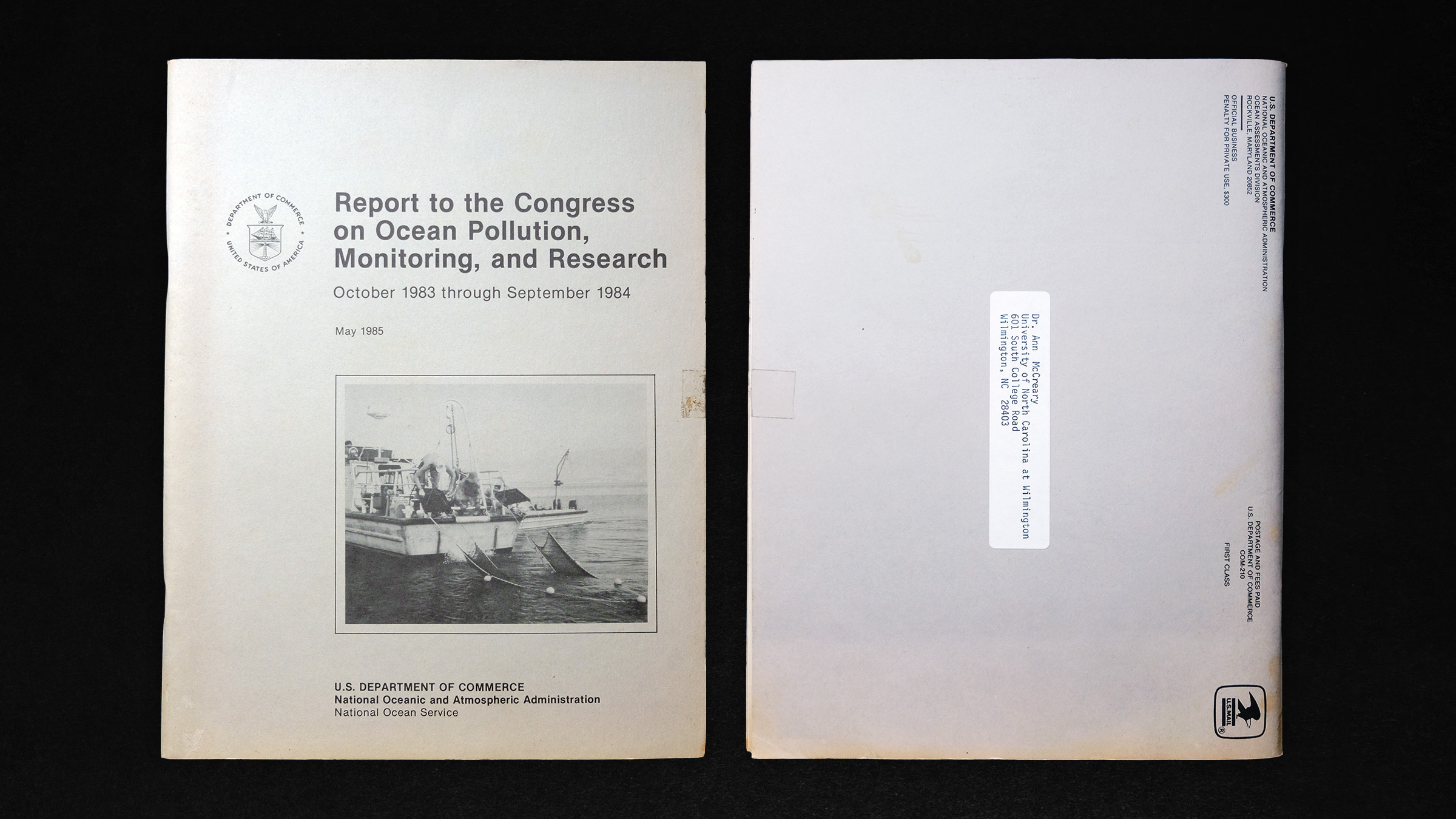

Our fish tank cleaner found this old Commerce Department report on ocean pollution in the Aquarium Mail Room wedged between boxes of expired snorkels and issues of Whale Weekly.
It appears to be a near 50-year-old government progress report on ocean pollution, stained with coffee and bound with staples rusted and oxidized by seawater exposure.
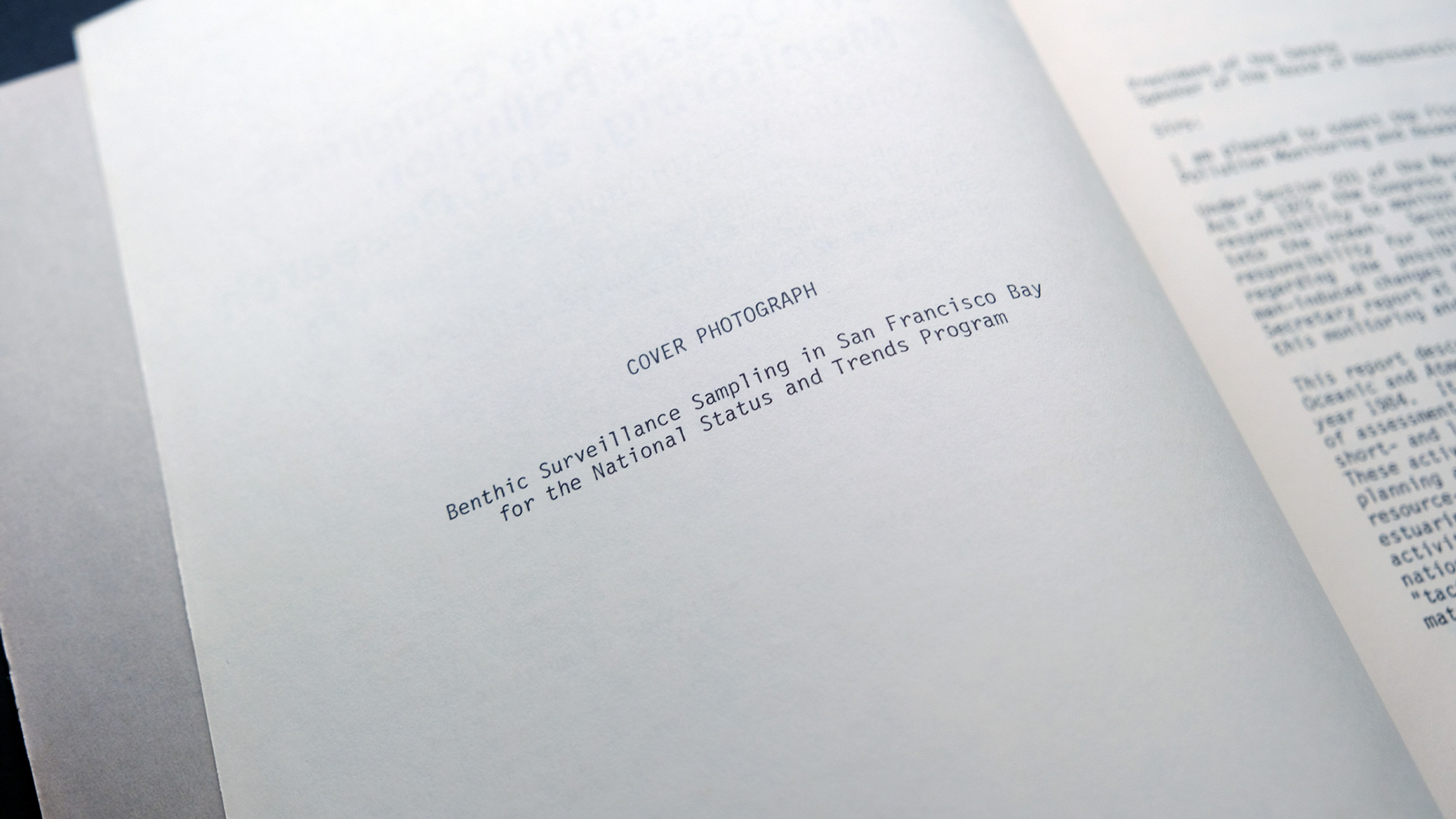
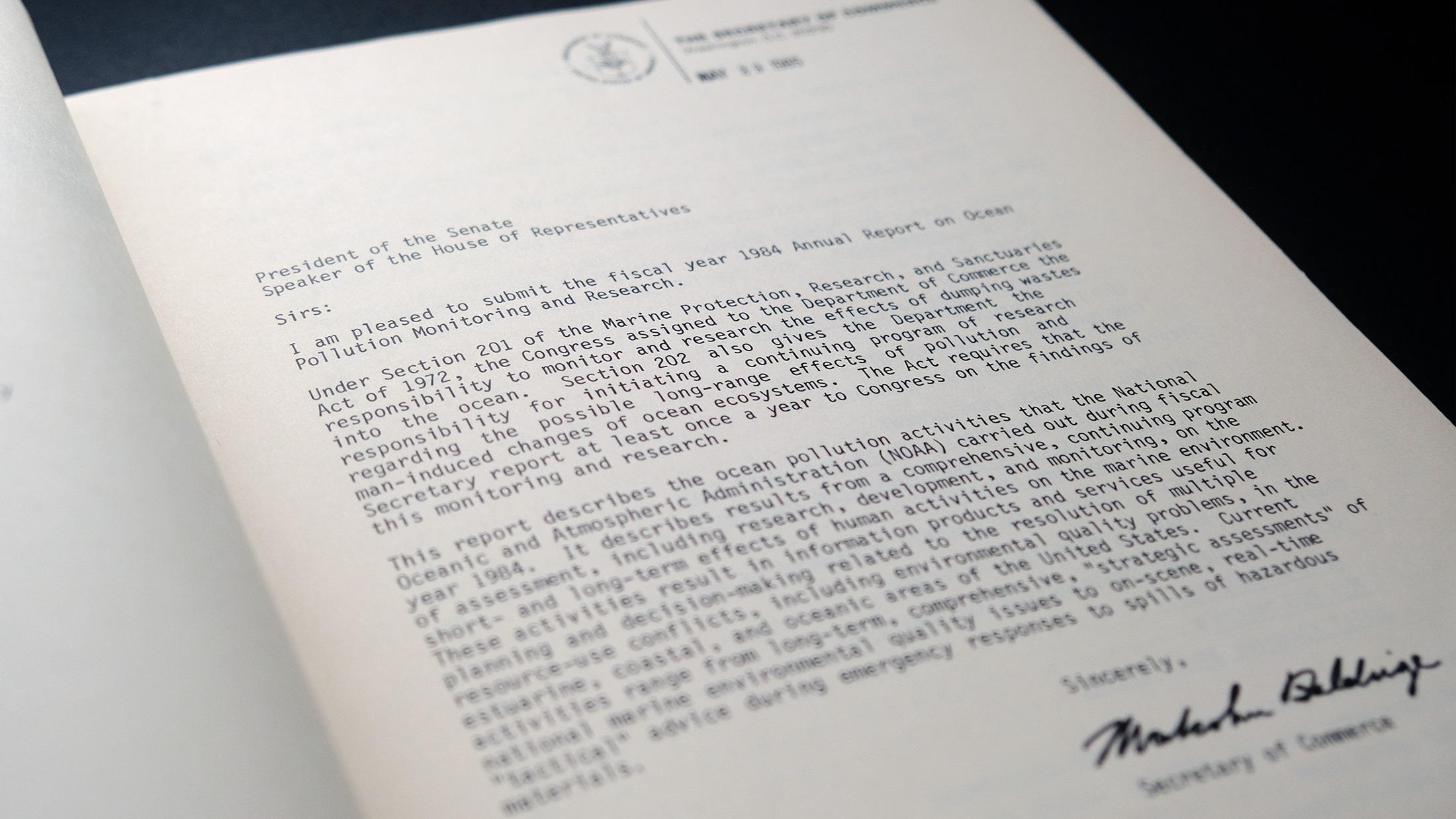
“Under section 201 of the Marine Protection, Research, and Sanctuaries Act of 1972, the Congress assigned to the Department of Commerce the responsibility to monitor and research the effects of dumping wastes into the ocean”.
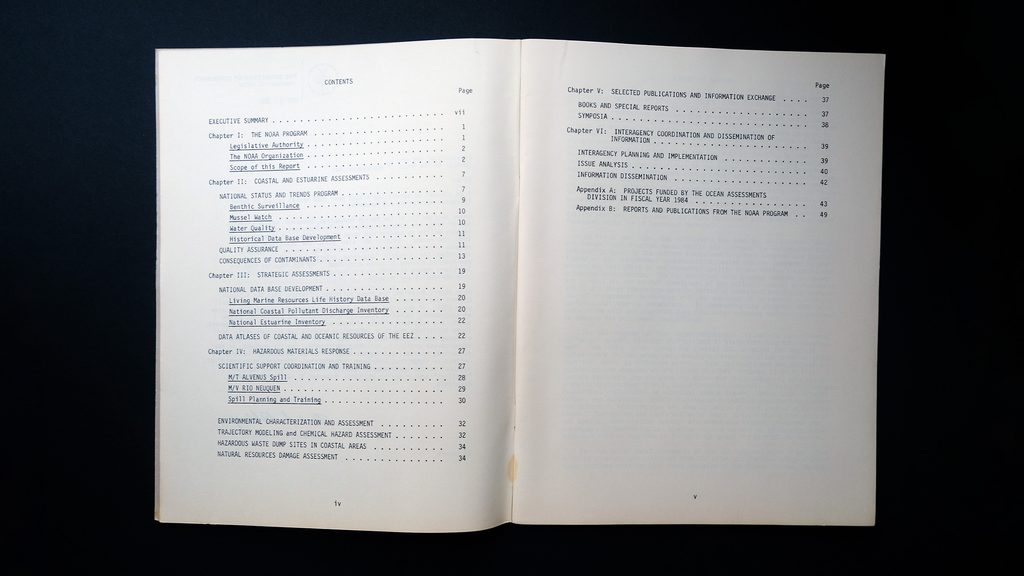
Many of these have been produced over the years, but this appears to be a special “Waste Edition” covering radioactive waste disposal. Very exciting.
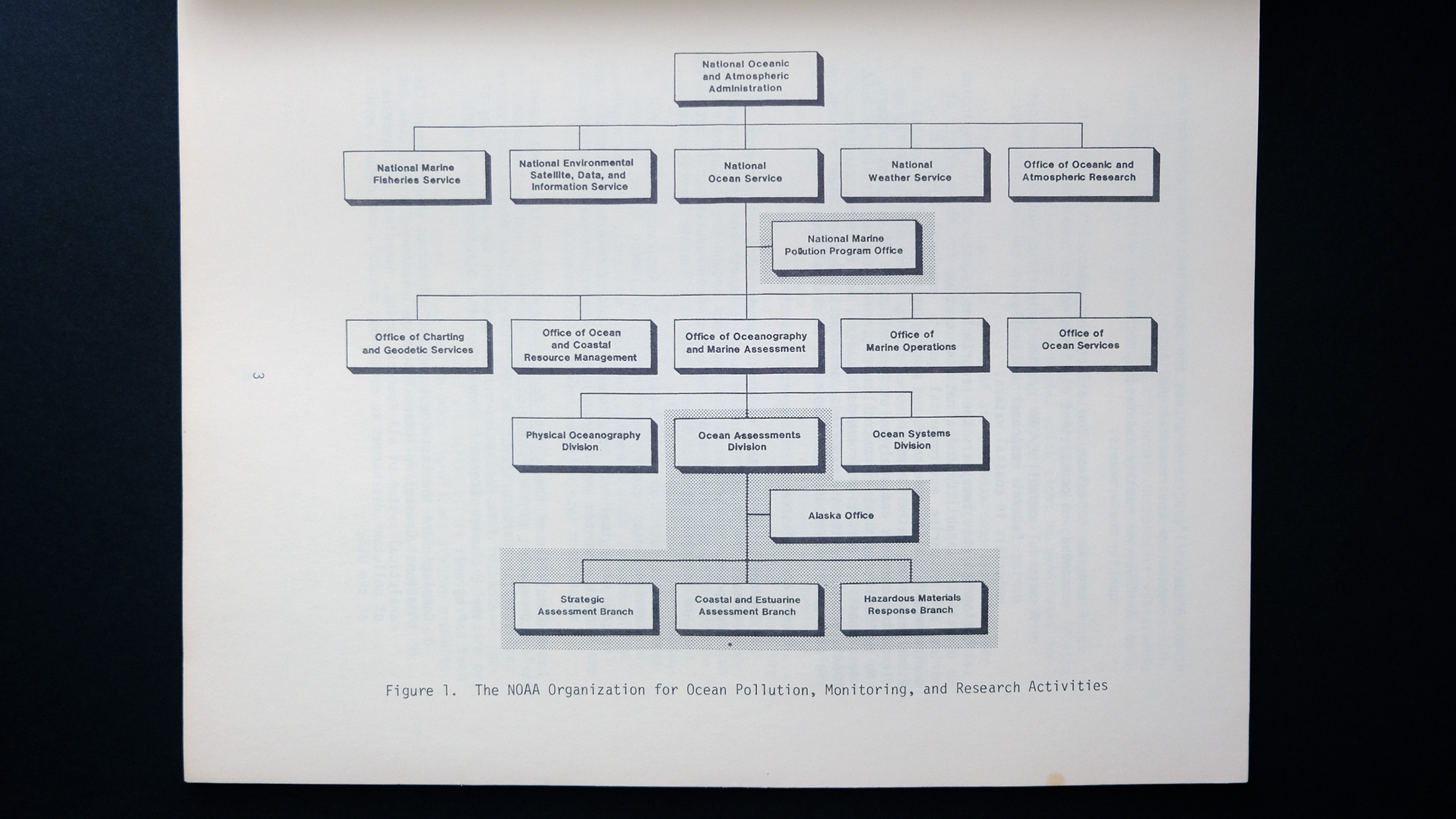
A massive, Kafkaesque org chart for the National Oceanic and Atmospheric Administration (NOAA) inside the pamphlet seems as much for the administrators and staffers who actually work within it as for casual browsers.
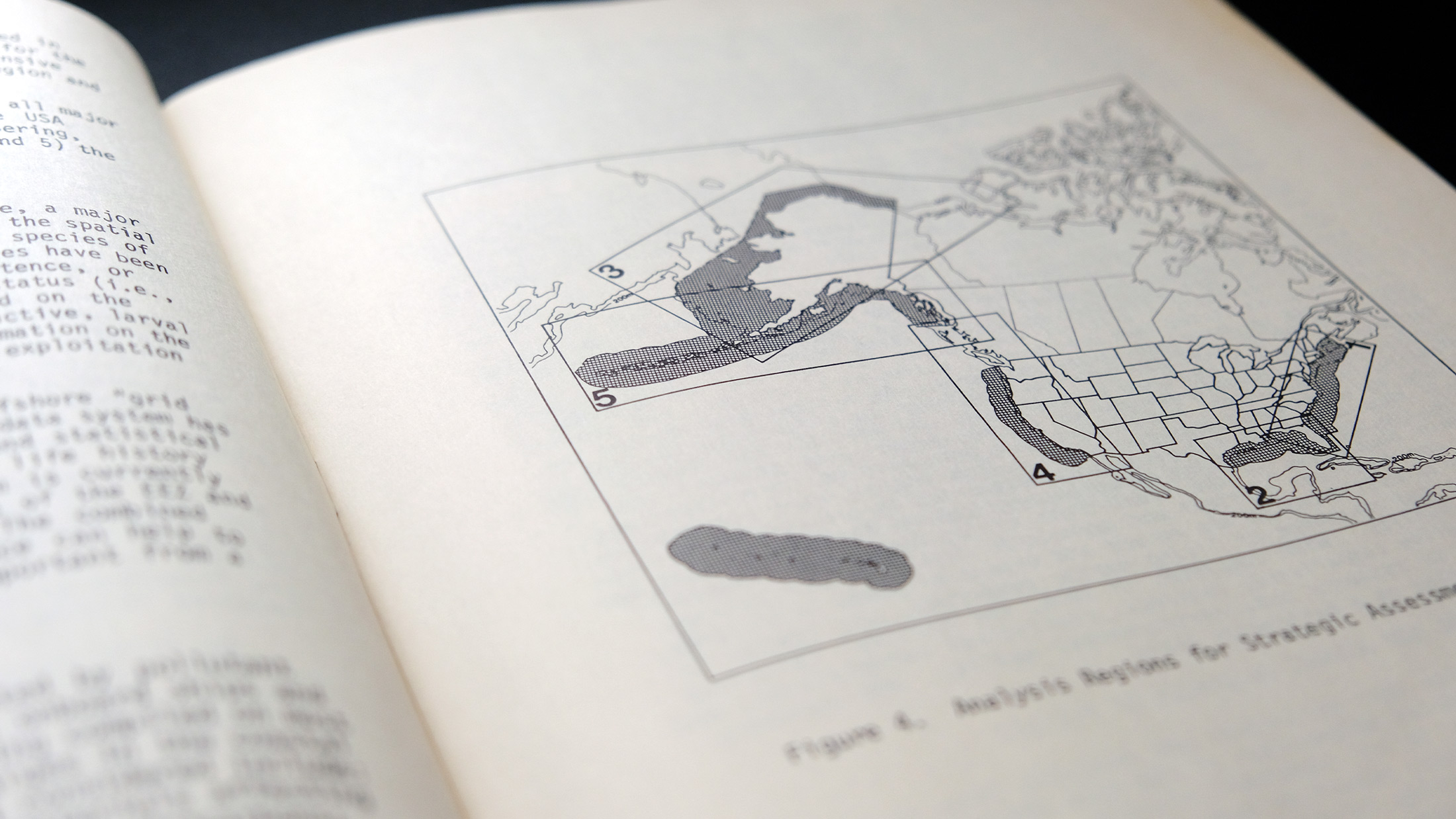
Most of the maps inside, illustrated with 1980s technology, reflect a naive optimism from a time when the effects of climate change were barely understood by the public. They are a dot-matrix dreamscape of exclusive economic zones hugging the coastlines, which must have seemed invincible and endless to government scientists at the time.

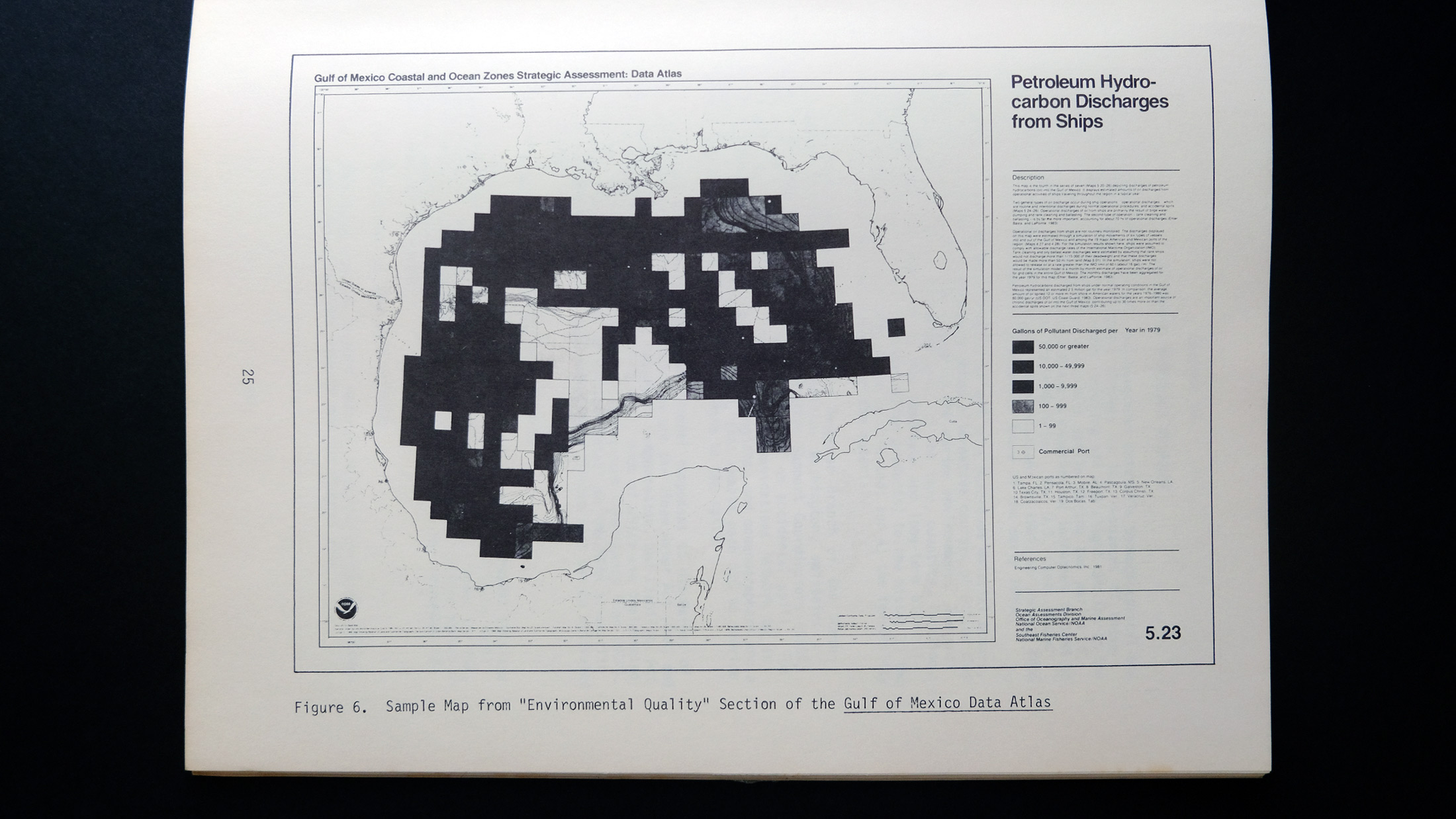
Larger, more complicated maps introduce us to phrases like “Data Atlas” and “Petroleum Hydrocarbon Discharges from Ships.” The Gulf of Mexico dances with black pixels, a discotheque fueled through the night by “Gallons of Pollutant Discharged per Year.”
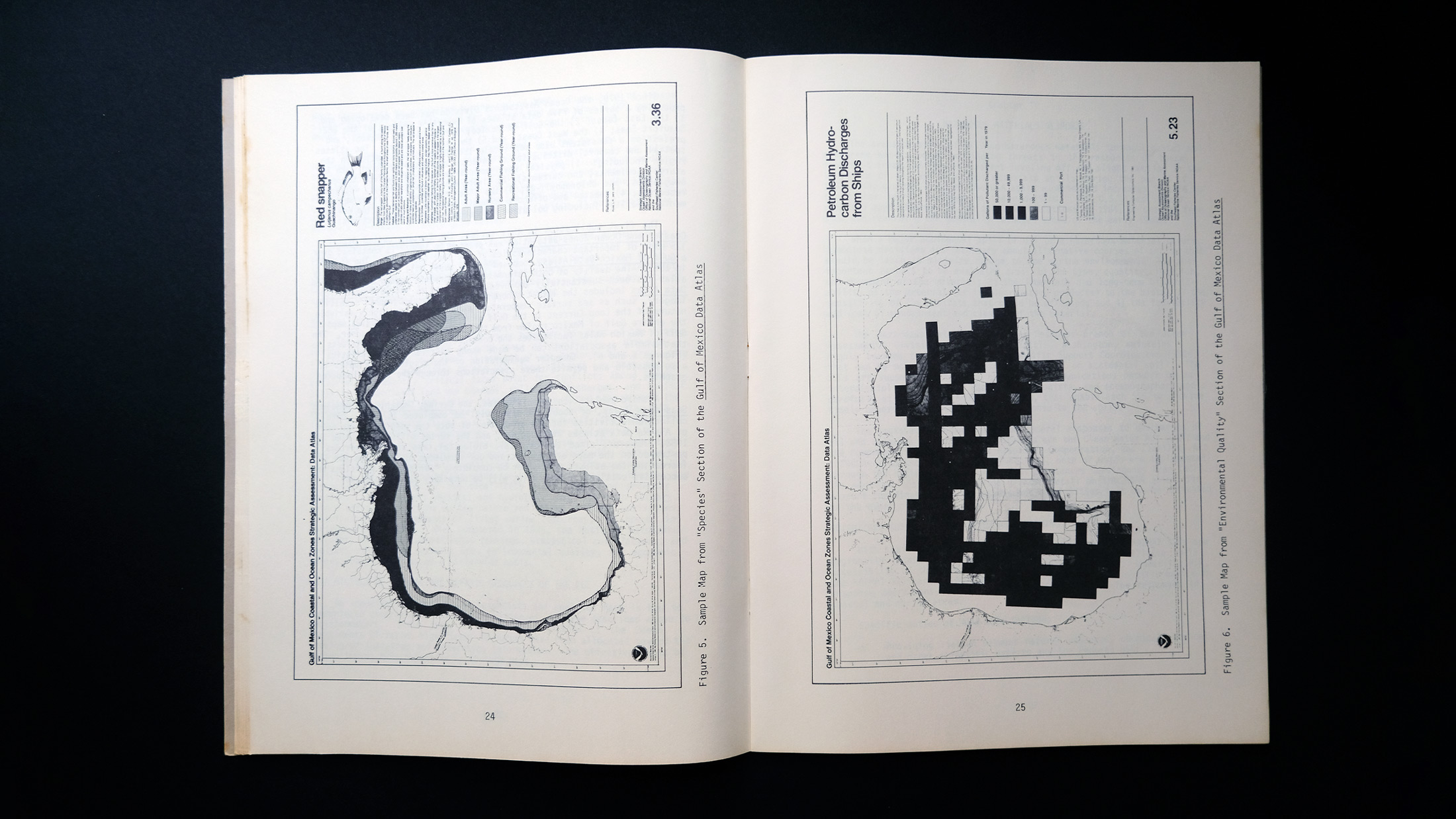
There is a kind of quiet beauty in these ink-blotter charts and maps, even if they symbolize the suffocation and dead-zoning of the range of the Red Snapper.
1980s horror-flick-style photographs of men and maybe even women in hazmat suits hanging out on floating barges force the reader to think about what “Emergency Ocean Disposal of GASTOXIN Canisters” must have meant back then or what it means now.
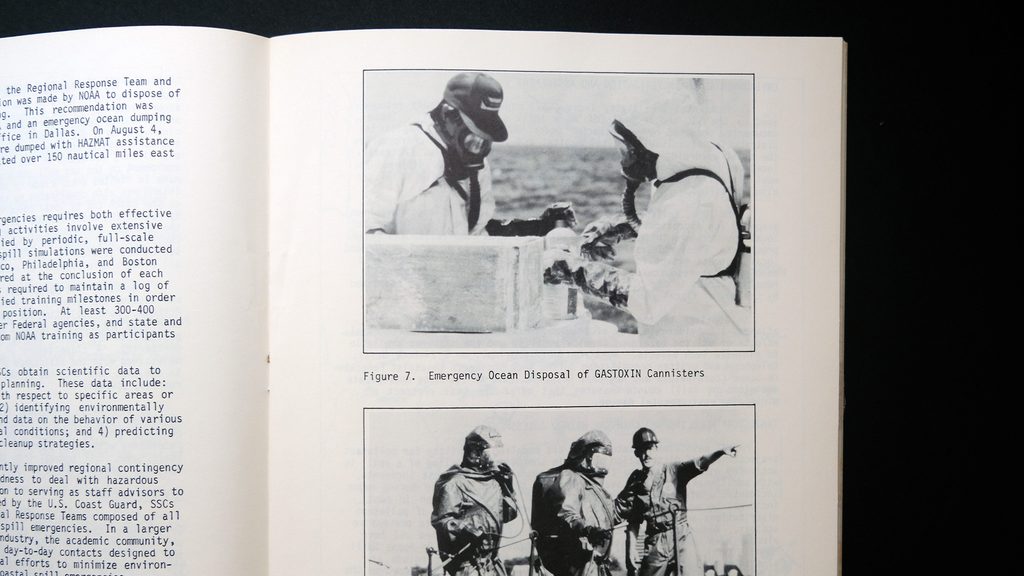
“After exhaustive deliberations with the Regional Response Team and all other response groups, a recommendation was made by NOAA to dispose of the hazardous material by ocean dumping. On August 4th, containers of the stabilized GASTOXIN were dumped with HAZMAT assistance in deep water at an ocean dump site located over 150 nautical miles east of Corpus Christi, Texas.”
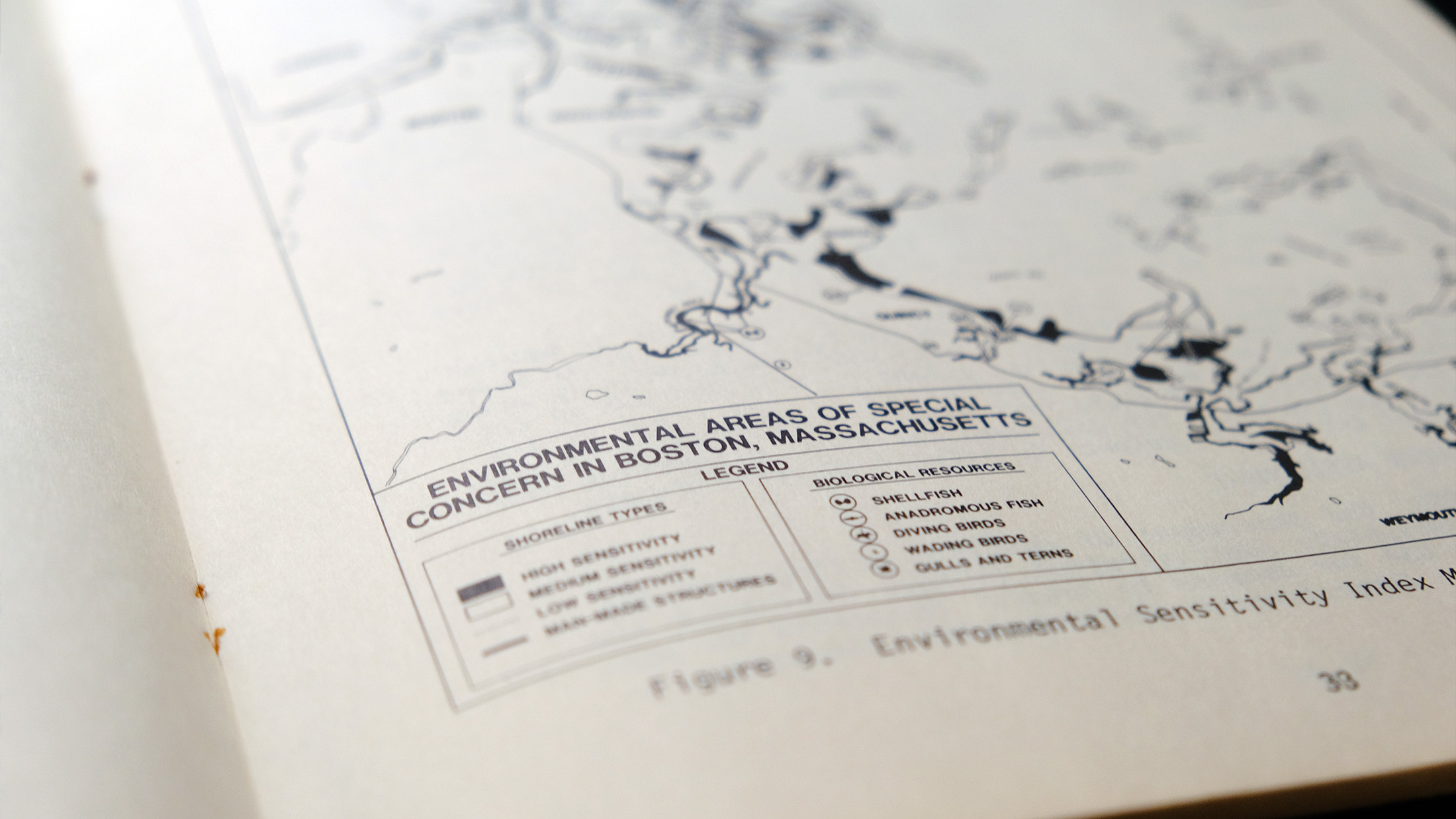
Some of the full page maps like “ENVIRONMENTAL AREAS OF SPECIAL CONCERN IN BOSTON, MASSACHUSETTS” would look really great as full sized posters.
The half-century-old government booklet ends, perhaps ominously, with a blank spread. The reader, likely an unpaid page or intern at the time, might have considered this an invitation to take notes. Maybe an opportunity for a grocery list. Red Snapper?
We can’t find any evidence of this document on the internet but we found an edition from 1988. Enjoy it here.