Over the summer, we received a mysterious cache of documents from one of our Forest Service attachés (Kyle, known internally only as Field Officer K.). They were recovered from the basement of a remote ranger station outpost. Our unpaid interns have only just gotten around to processing the files—but since they date from the 1960s, ’70s, and ’80s, I suppose time is all relative.
We’re presenting them here in high-resolution glory, with minimal commentary, and letting the pieces speak for themselves.

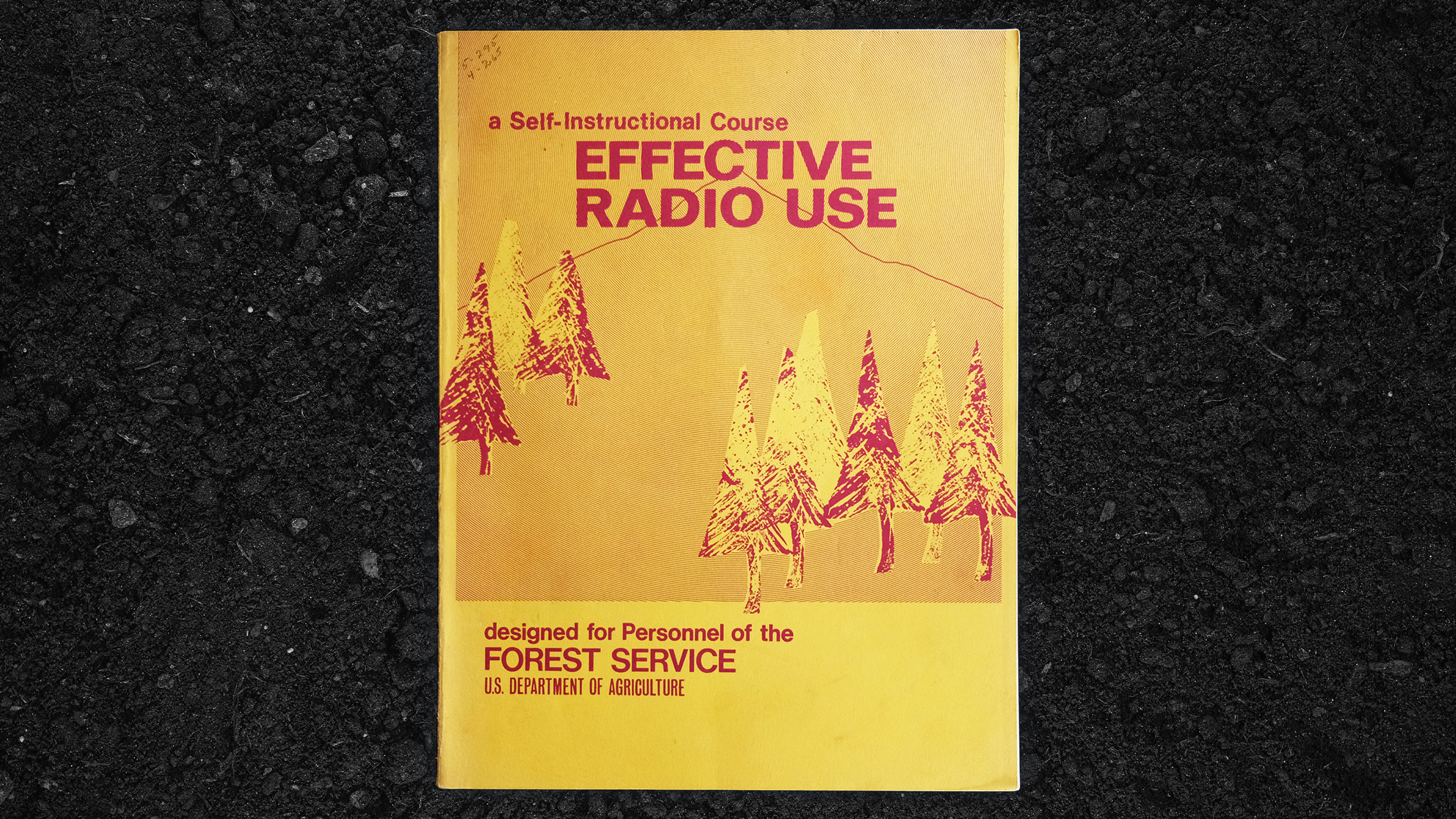
A Self-Instructional Course: Effective Radio Use boldly pairs a crude, childlike collage tapestry of forest texture and minimalist mountain line work with an anarchically typeset assault of words and letters — red on yellow, no less. The whole thing screams, “I am an alarm bell of a book about trees.”
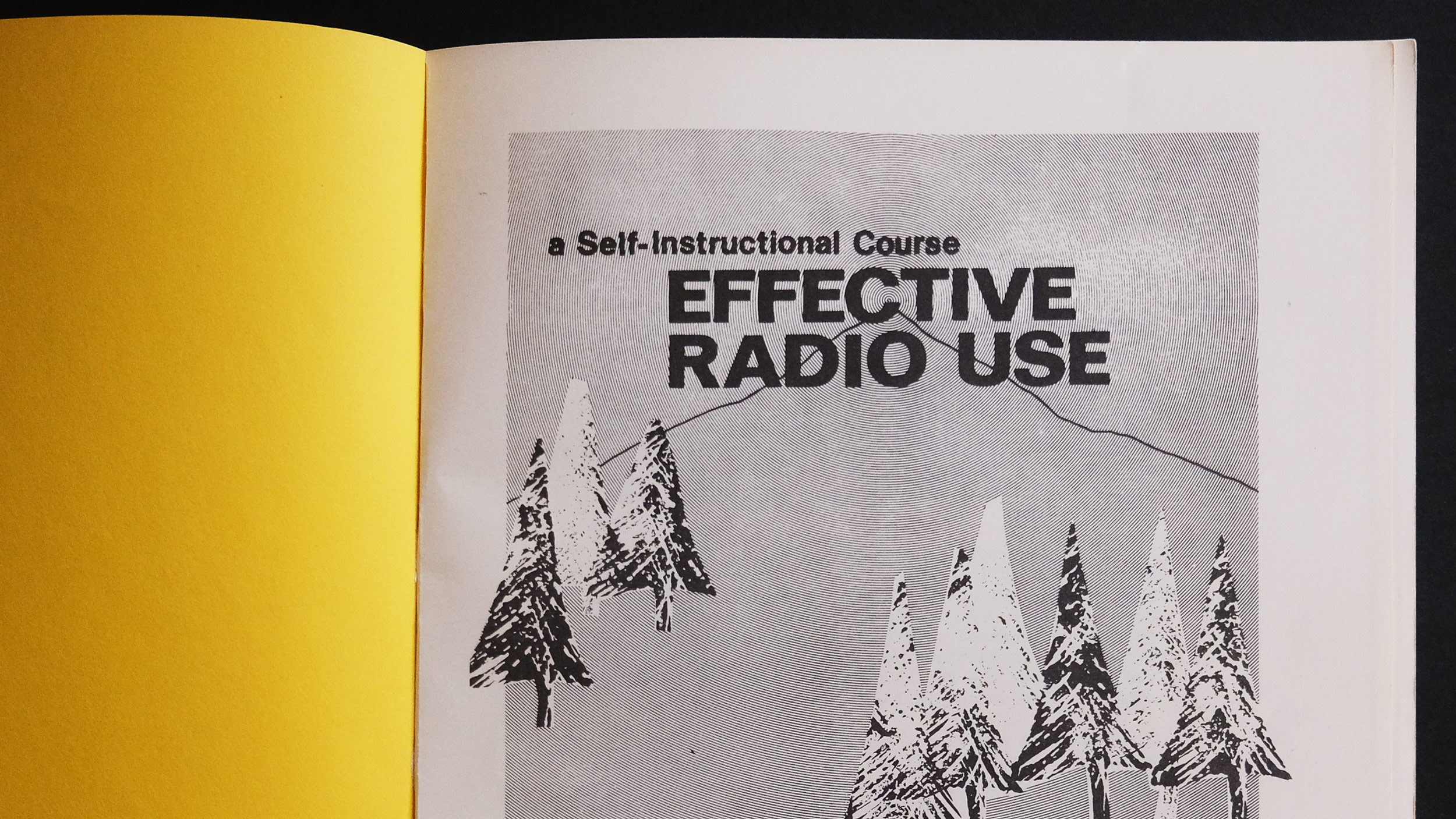
NOTE TO TRAINEE — This is your book. Keep it and refer to it as needed.
a Self-Instructional Course: Effective Radio Use (1969) by the US Forest Service
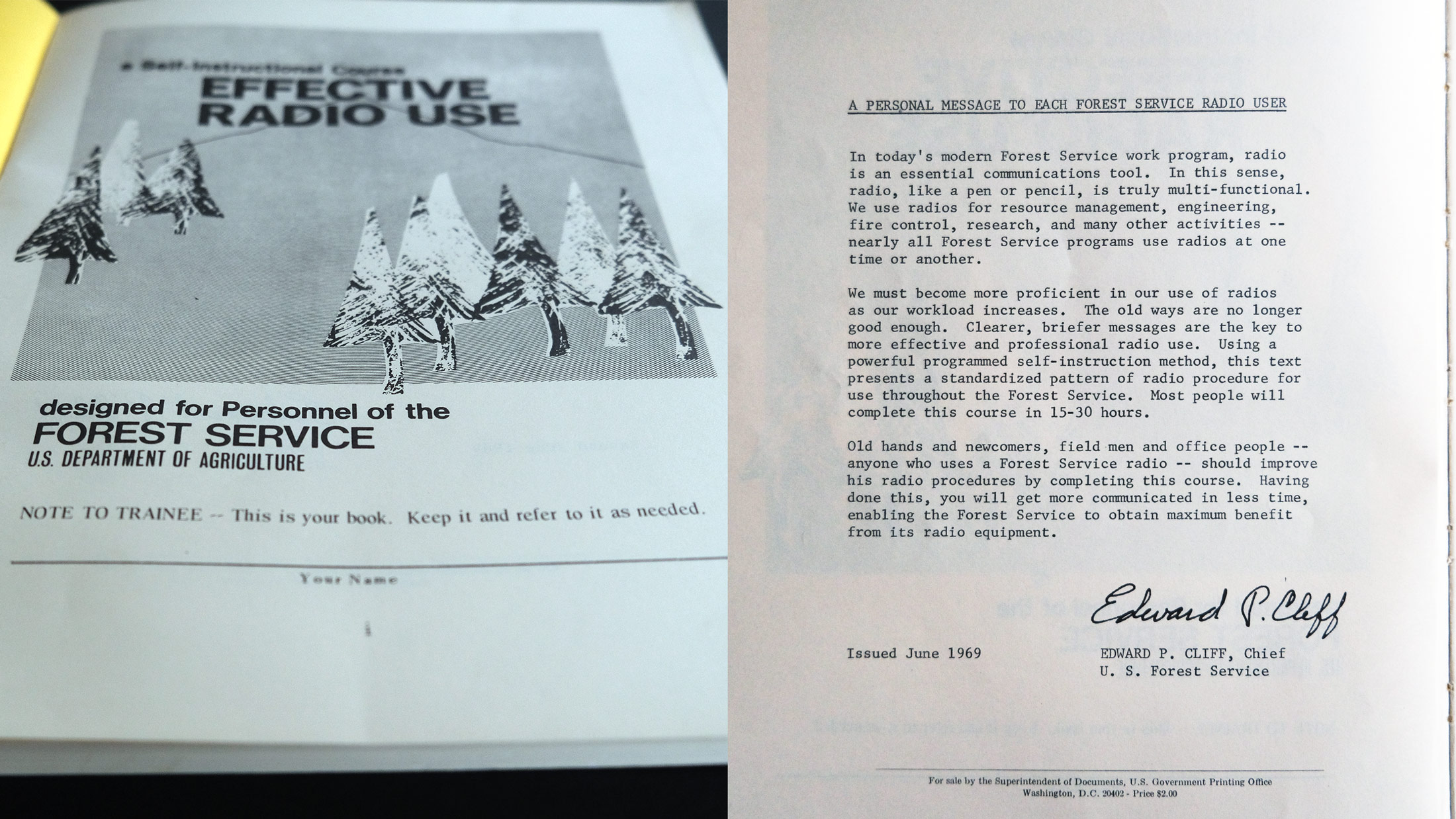
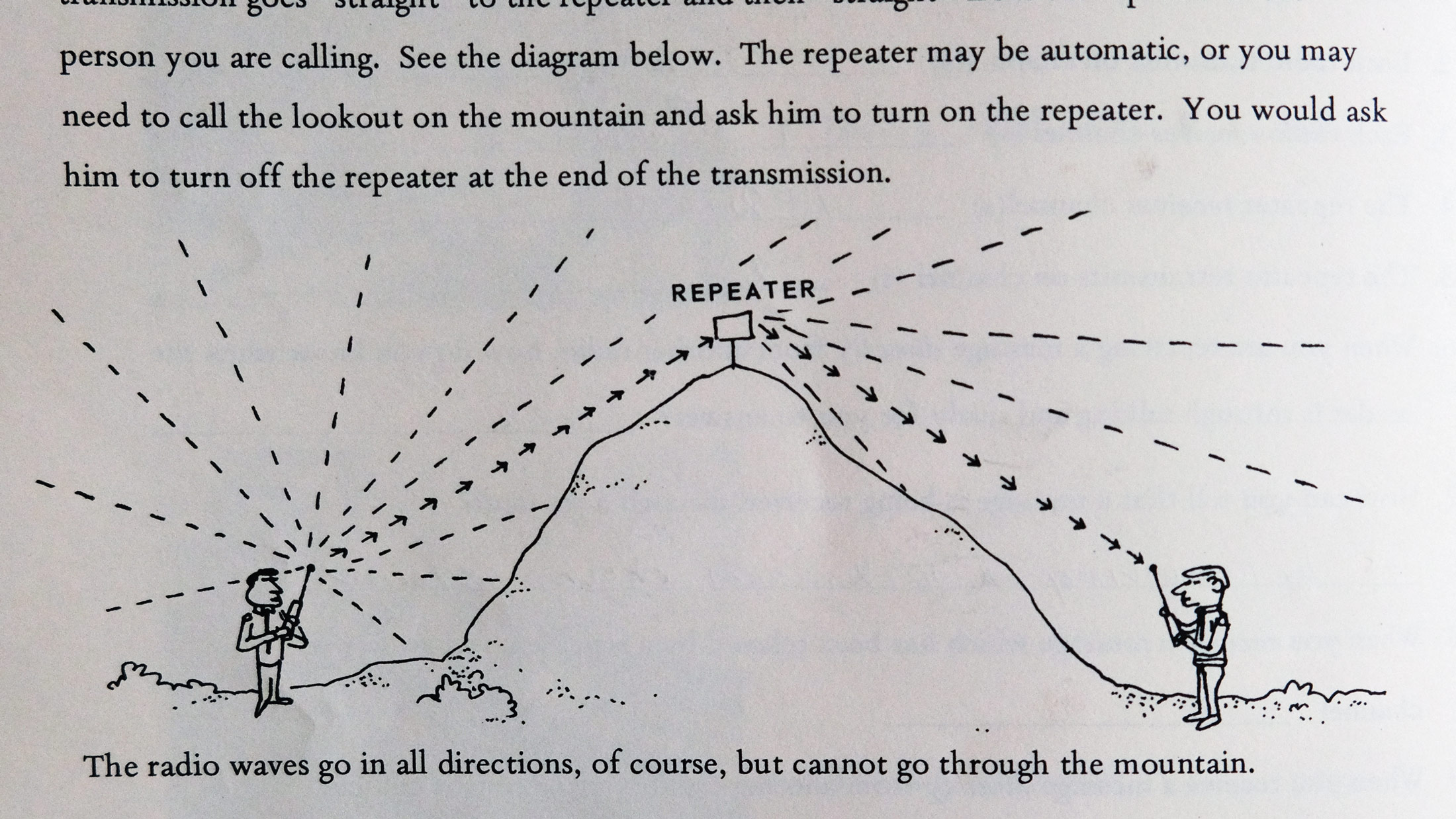
Edward P. Cliff, Chief of the U.S. Forest Service, declared in 1969 that we—the royal we, like, all of us Americans, I assume—“must become more proficient in our use of radios as our workload increases. The old ways are no longer good enough.” Nothing could be closer to the truth today, in 2025.
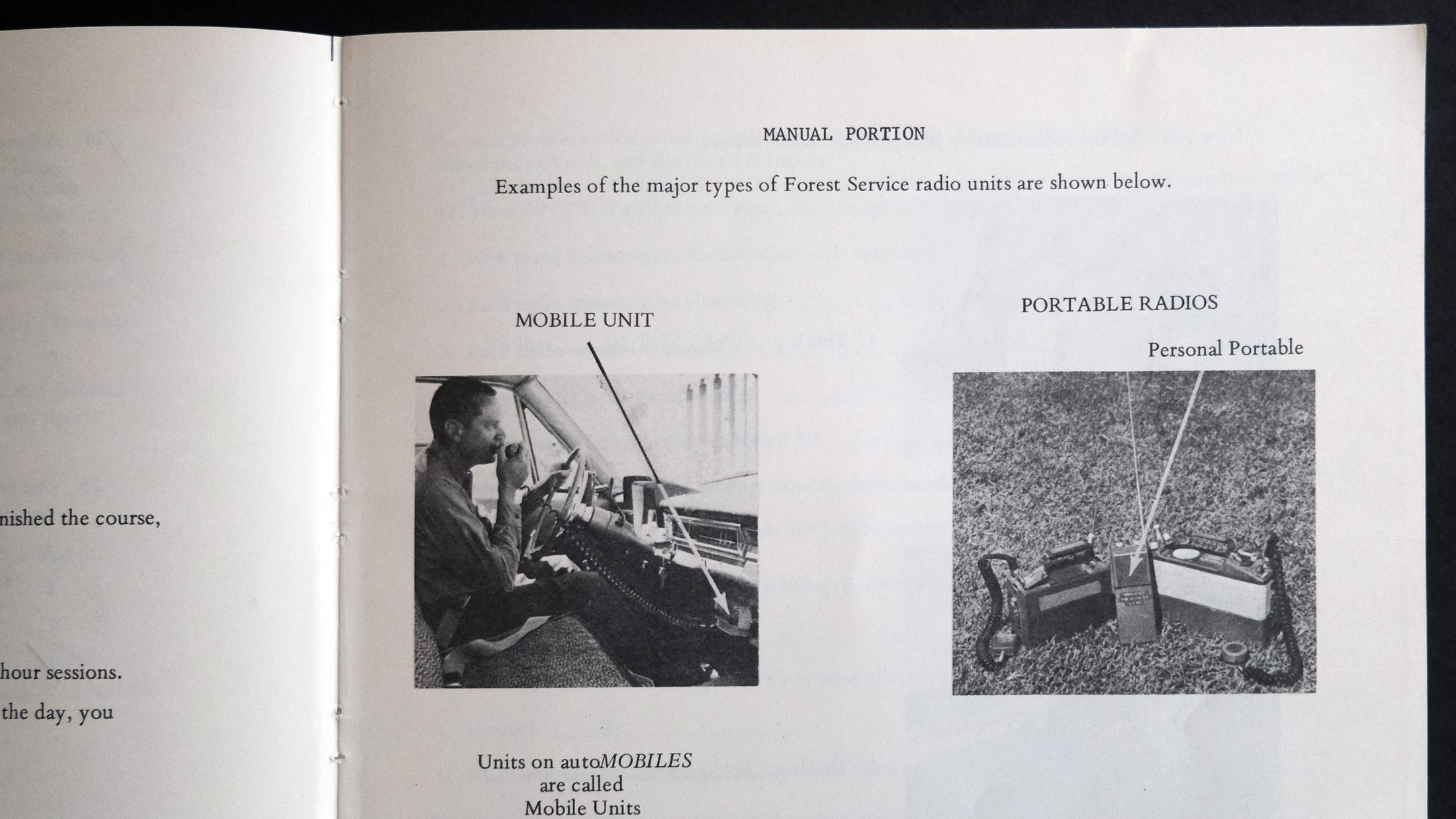
The photos of old radios in this wild, ancient government book are super cool.
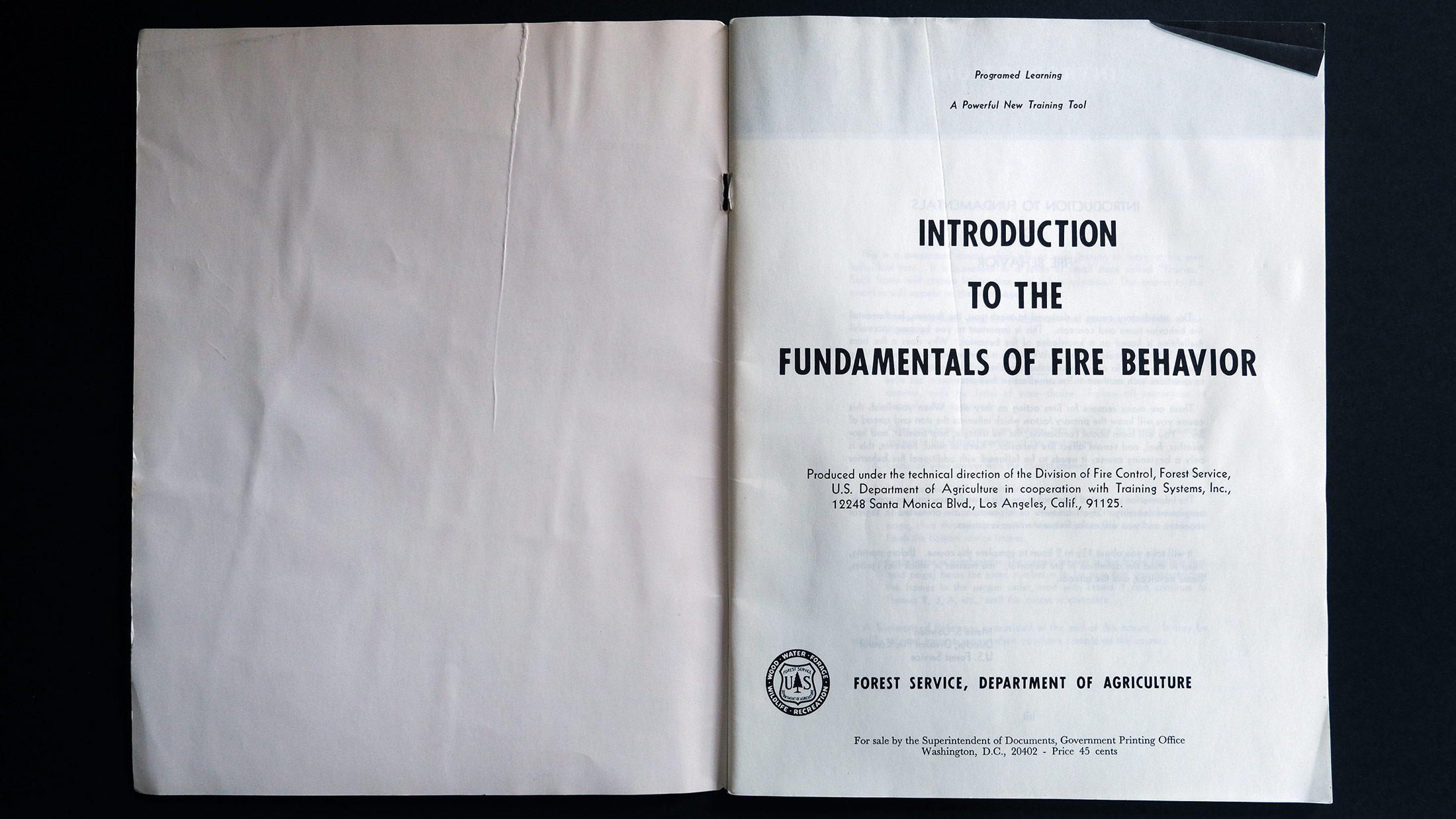
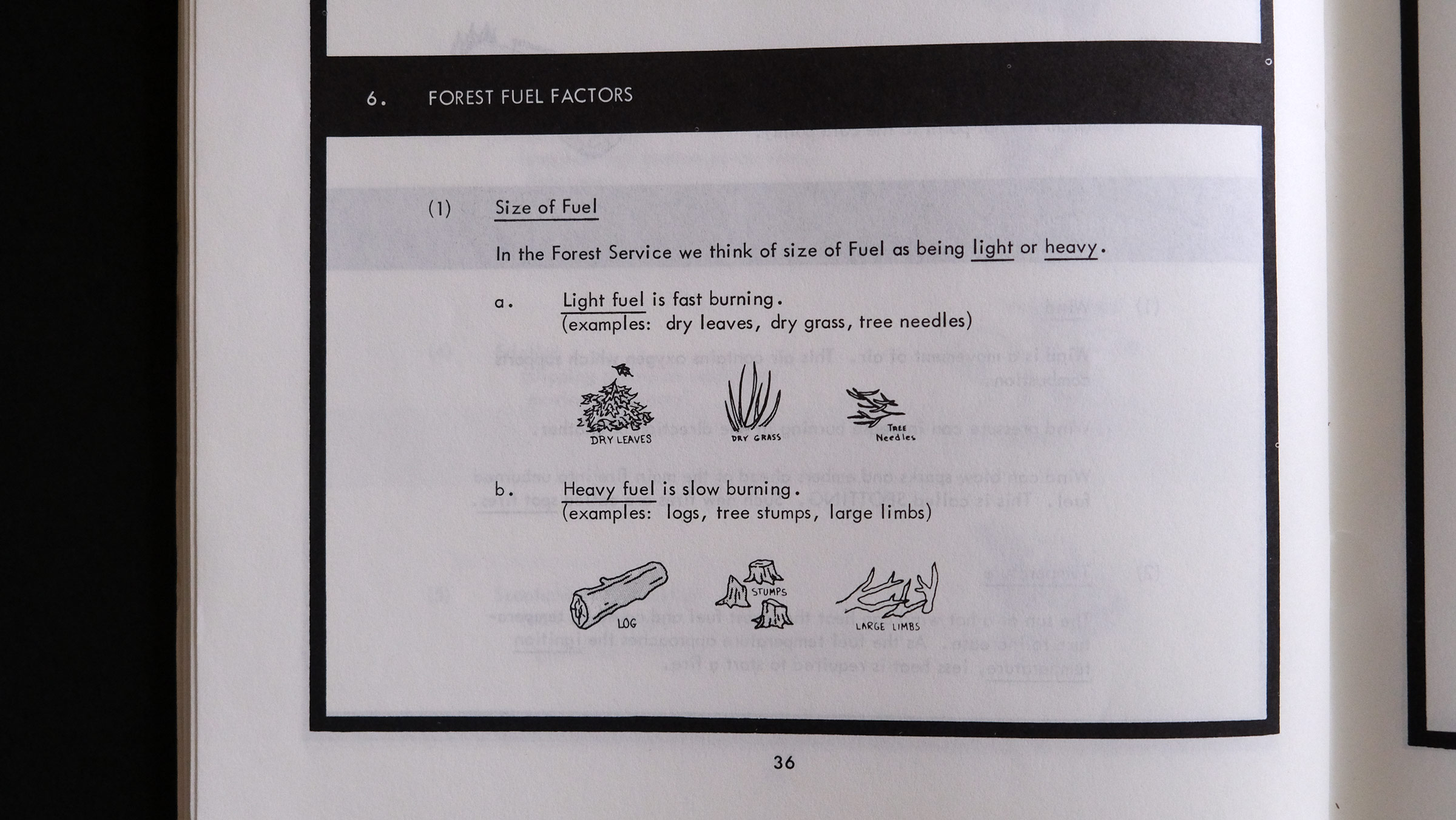
The cover of Introduction to the Fundamentals of Fire Behavior is both cool and terrifying. The undoubtedly secret-society-adjacent pyramid of fire ingredients appears to be launching some kind of supersonic missile to places unknown and for reasons unknown.

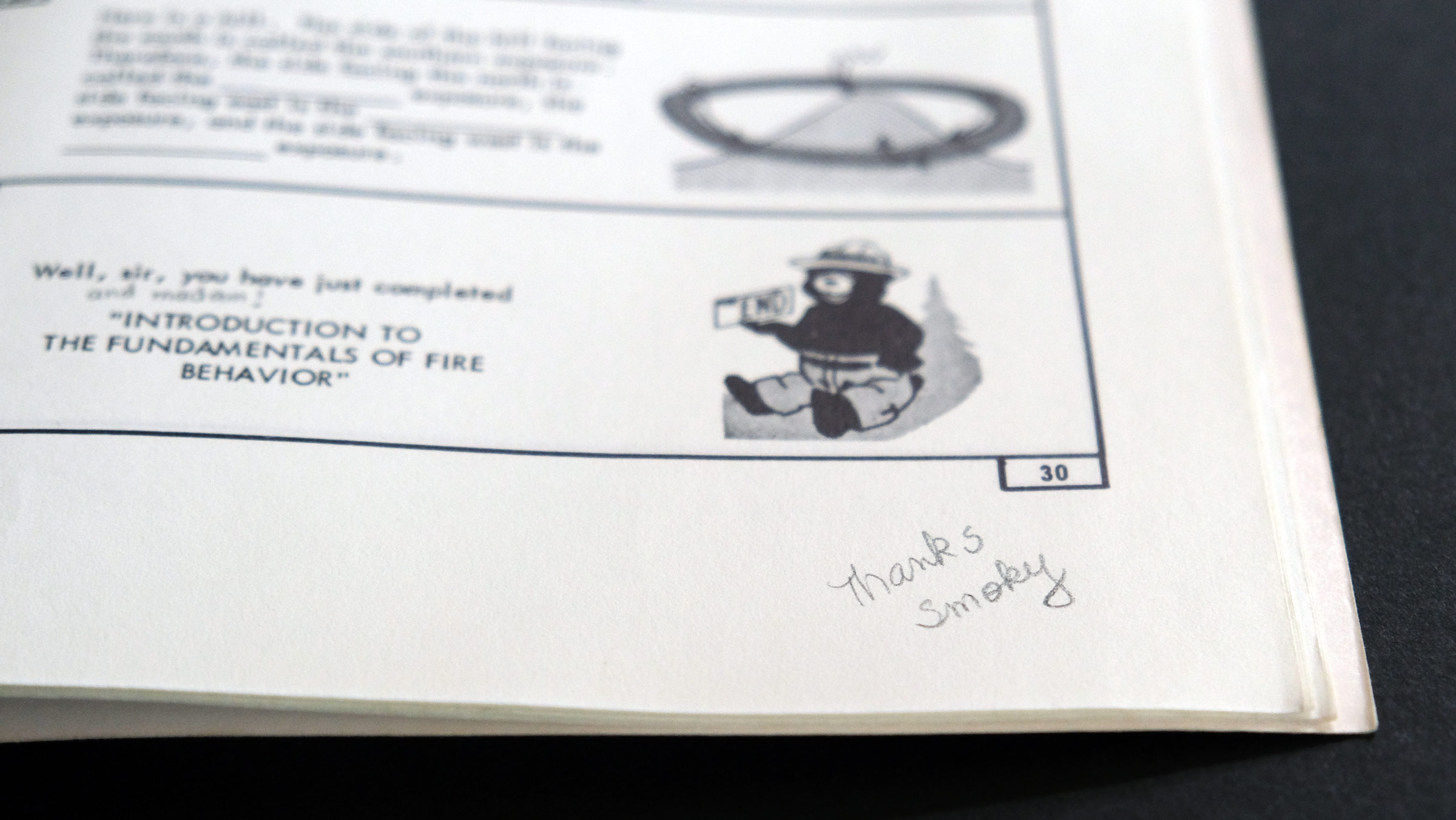
The illustrations throughout the workbook are less intimidating and pretty entertaining. This particular copy was filled with personal notes and marks from whoever owned it at the time. Someone lovingly wrote “Thanks, Smoky” beneath an early illustration of the bear.
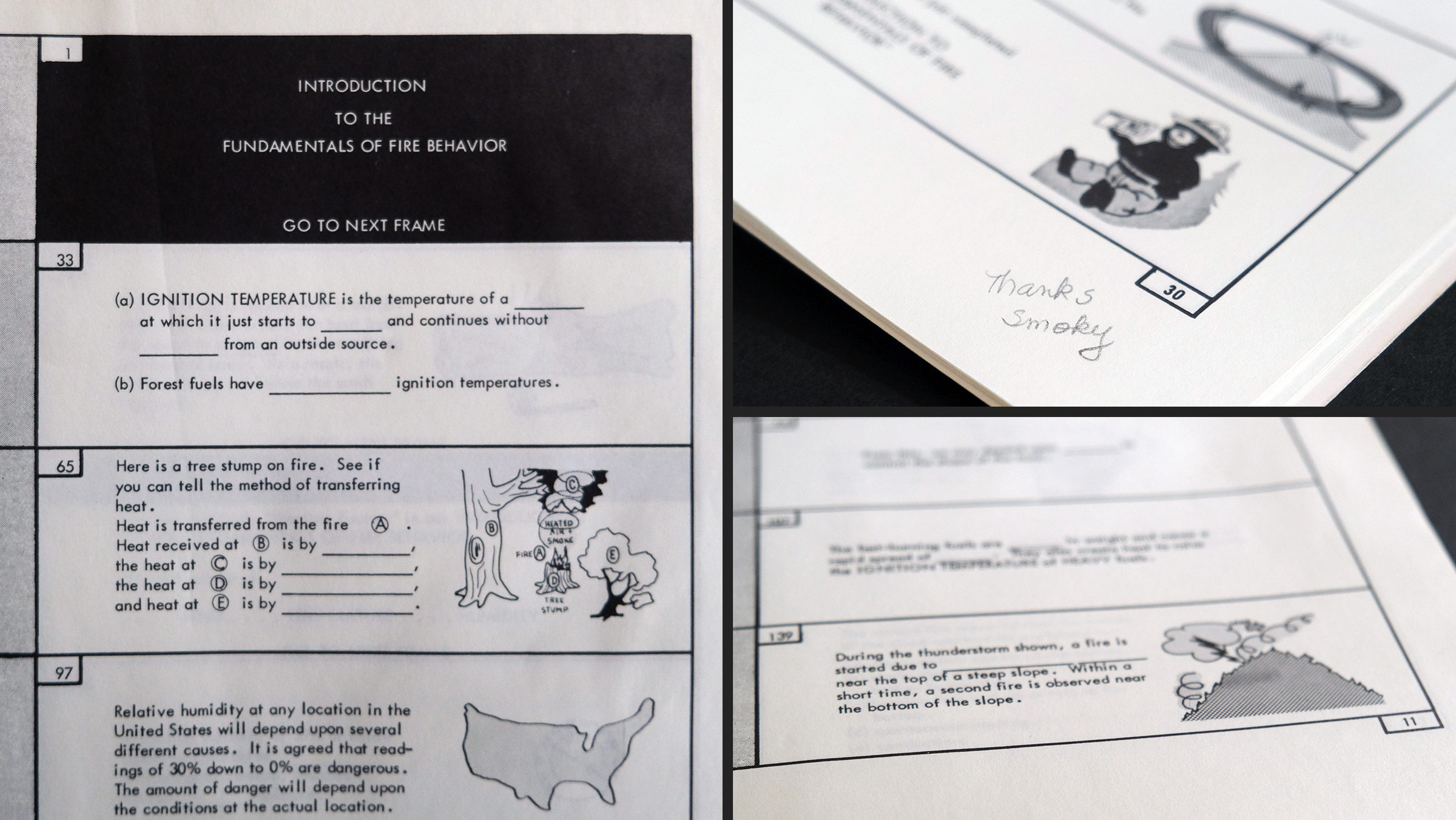
(a) IGNITION TEMPERATURE is the temperature of a ________ at which it just starts to ________ and continues without ________ from an outside source.
Introduction to the Fundamentals of Fire Behavior: Programed Learning, A Powerful New Training Tool by the US Forest Service (1960s)
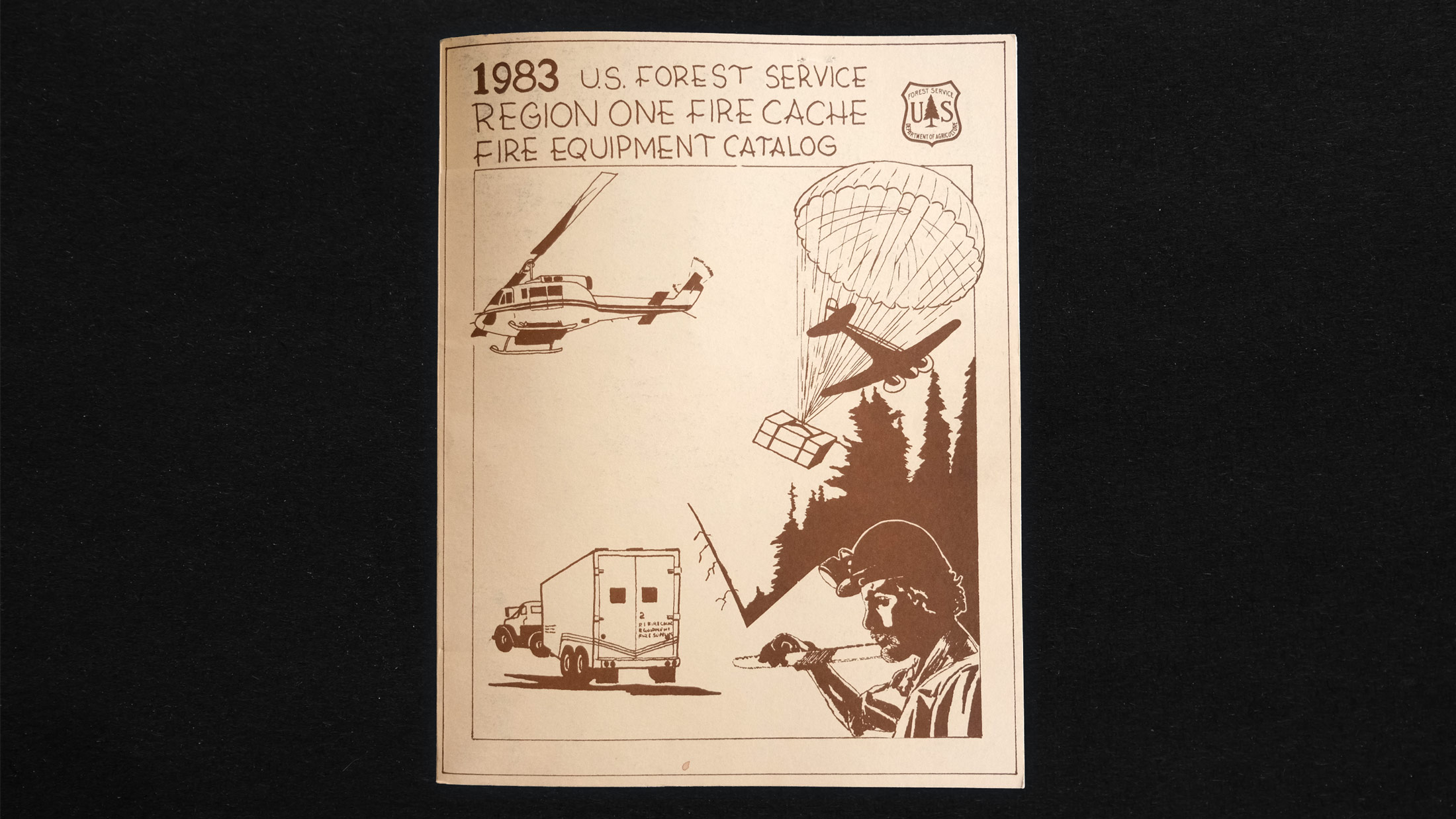
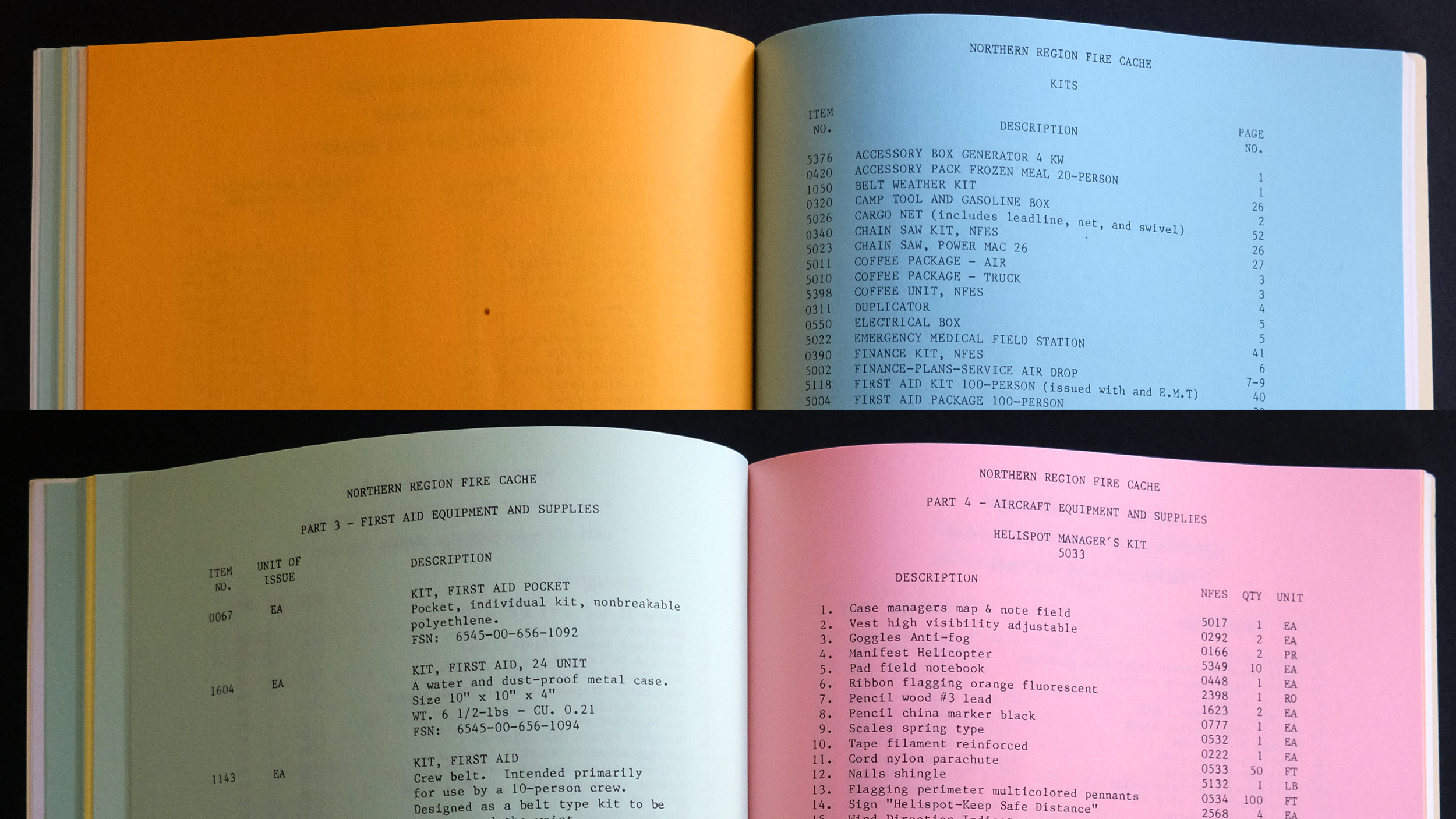
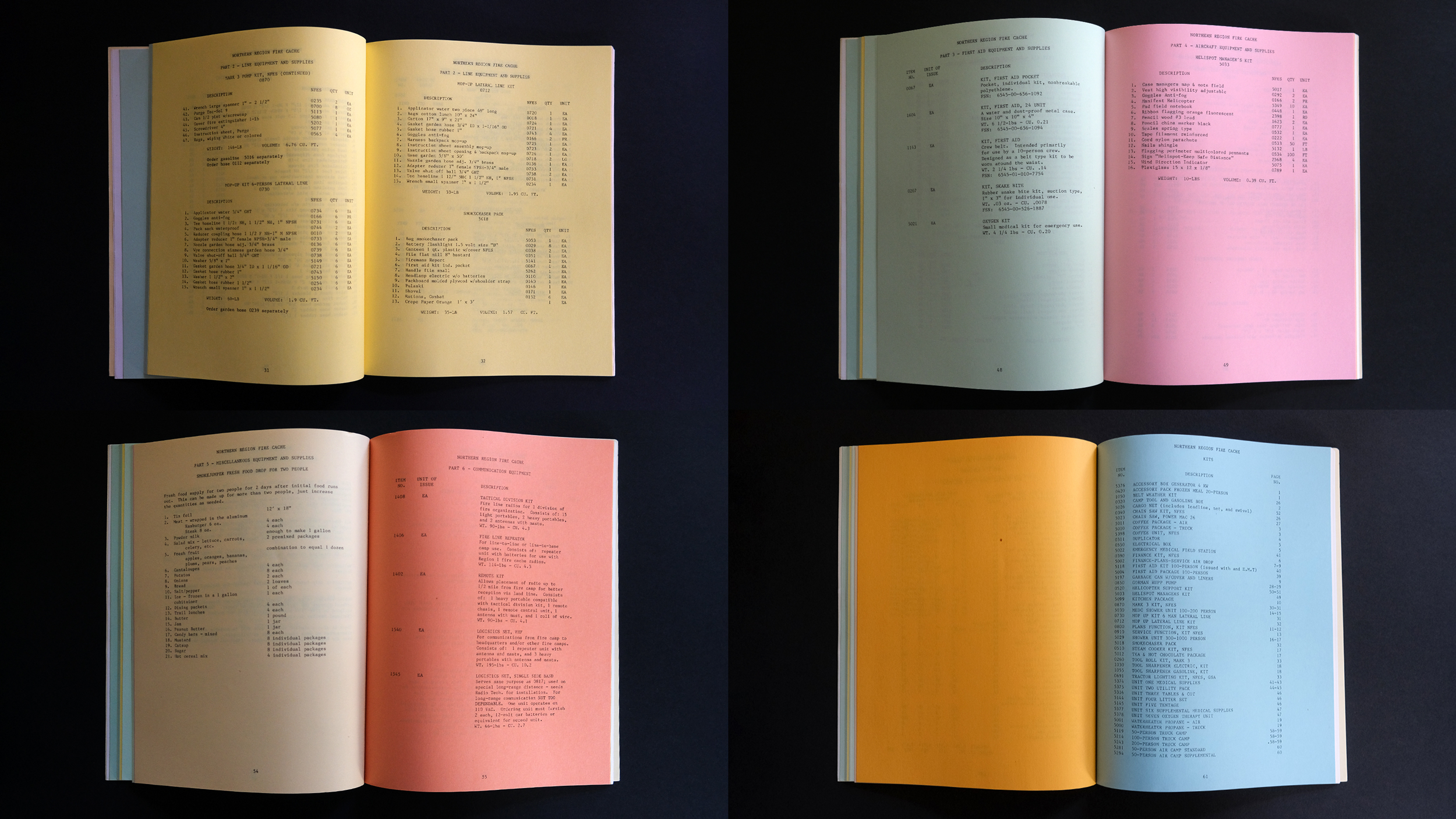
The down-home, folksy typography and illustration treatment on the cover of the U.S. Forest Service Region One Fire Cache Fire Equipment Catalog hides some beautifully typeset interior pages printed on about six different colors of paper. This rainbow of fire information must have been a real pleasant read for the beleaguered, log-worn Forest Service ranger of 1983.
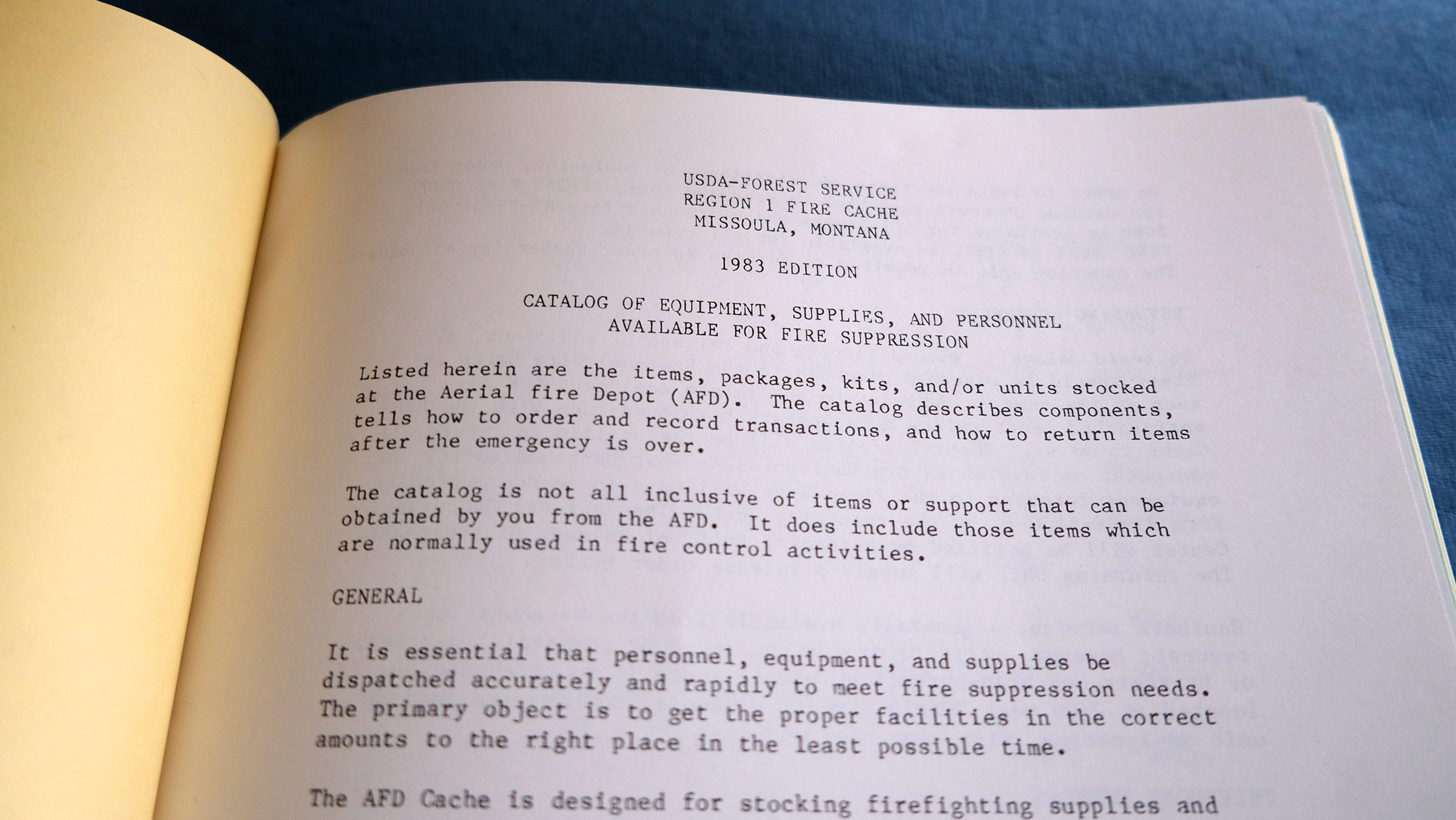
One imagines them leafing lazily through the neon Lite-Brite pages in a remote cabin outpost, memorizing the item numbers of Northern Region Fire Cache prizes like “5011: Coffee Package — Air” and “0430: Chainsaw Kit.” I bet the paper smelled the same back then as it does now.
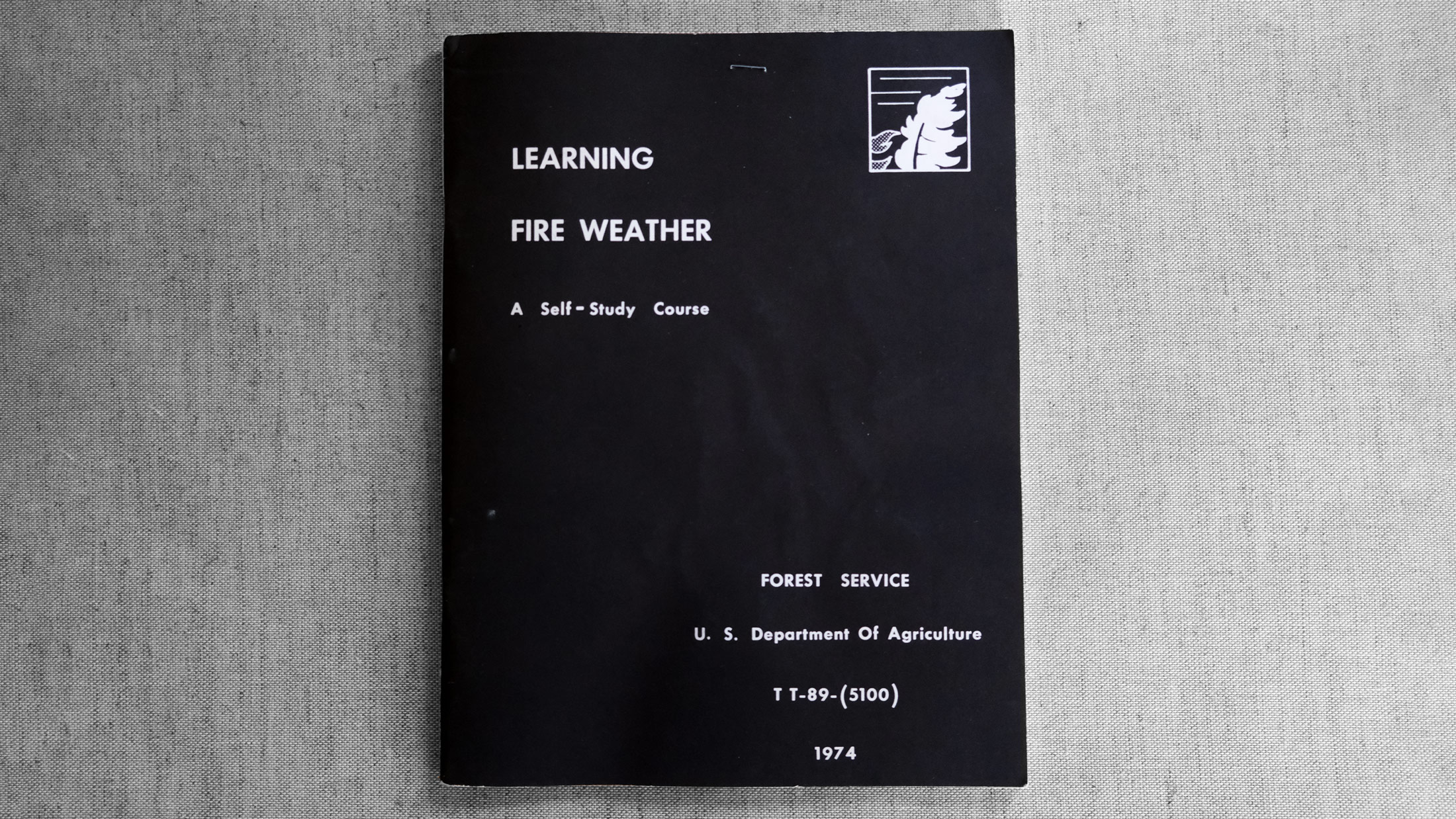
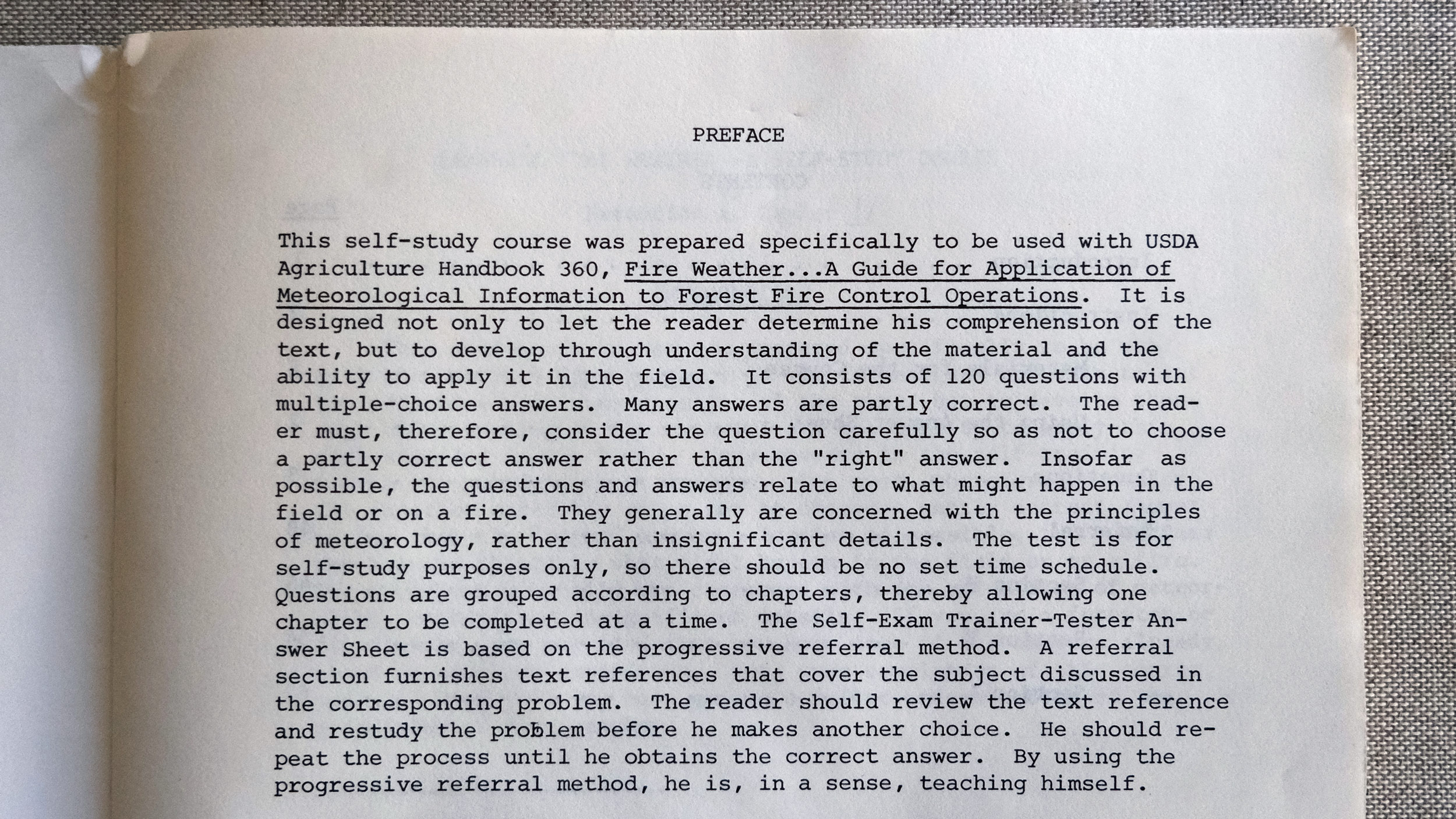
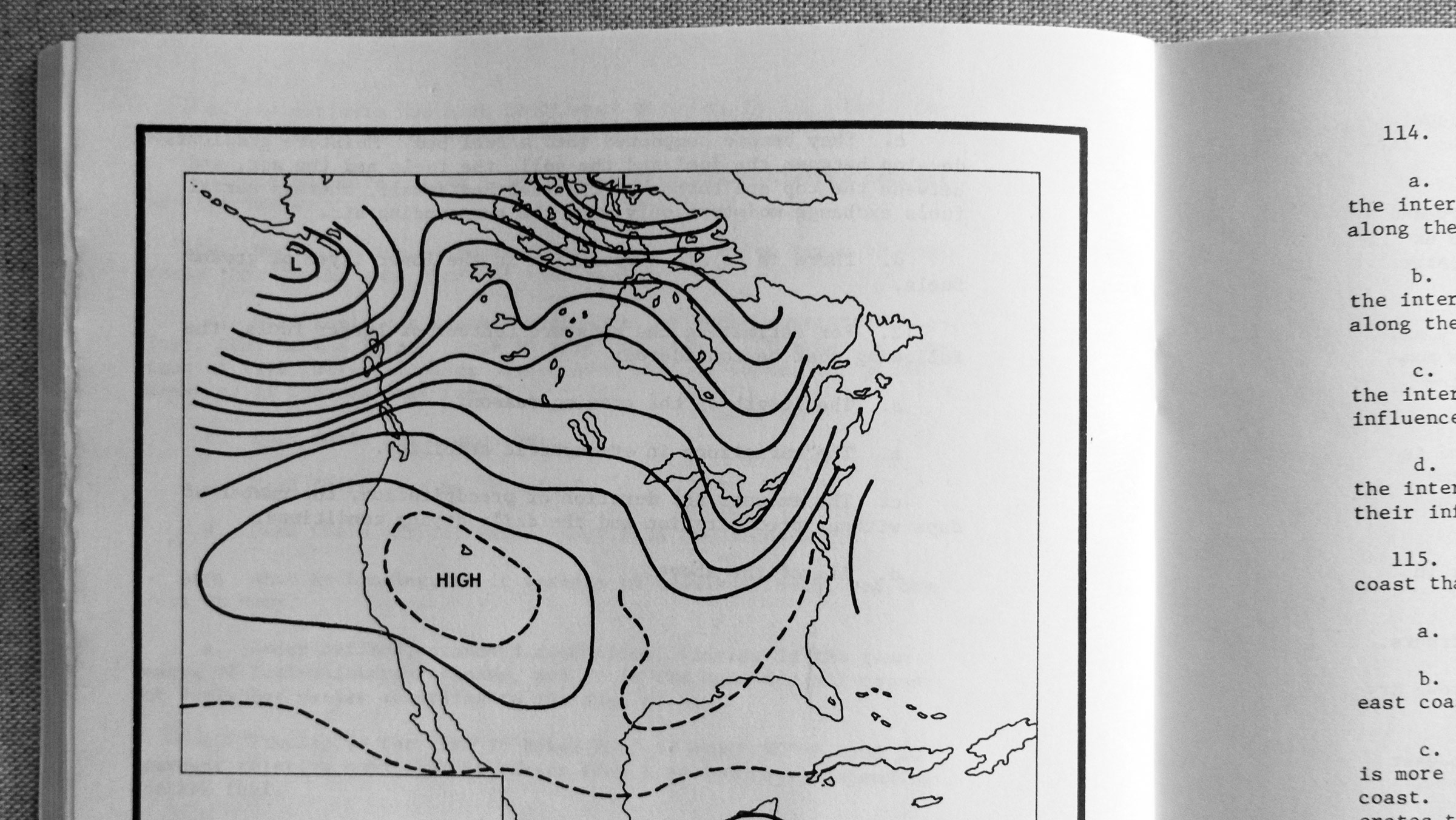
Learning Fire Weather: A Self-Study Course introduced us to phrases like “saturation vapor pressure” and “fuel moisture”—as well as some advanced concepts involving obscure, often off-limits, layers of the atmosphere. Everything inside the book is beautifully illustrated in a simple, timeless way.

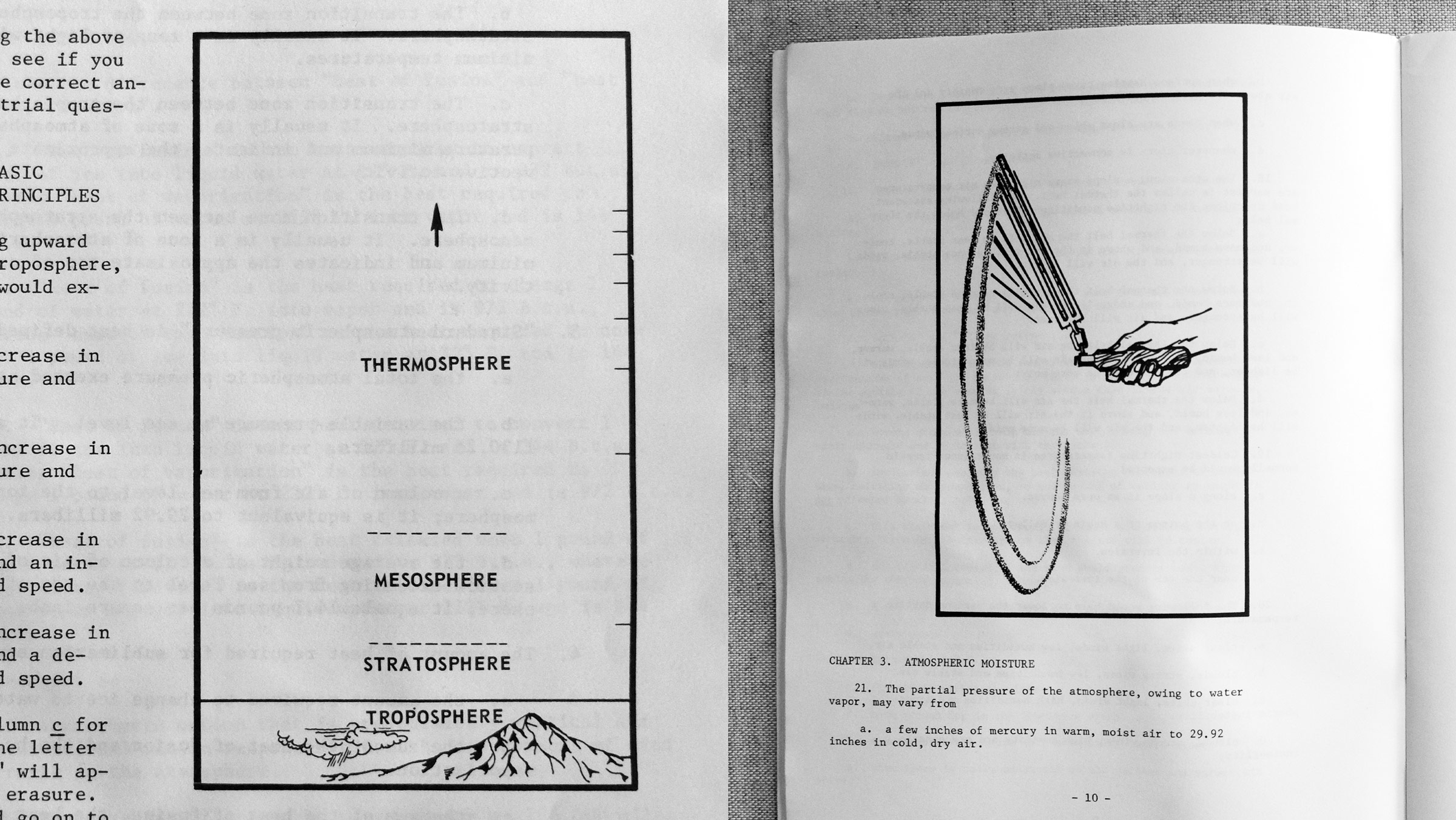
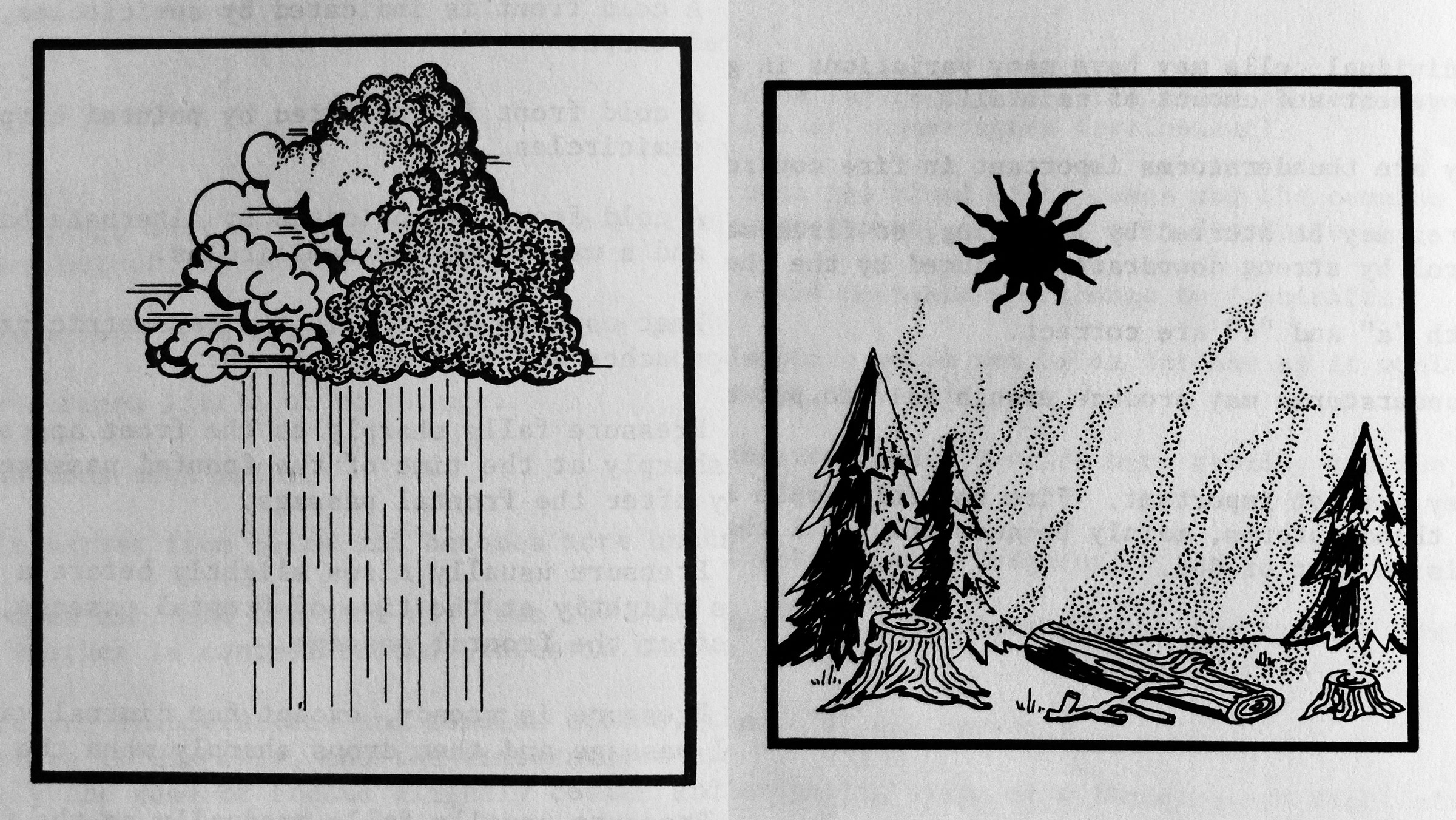
Some of these illustrations would make really great line work tattoos.
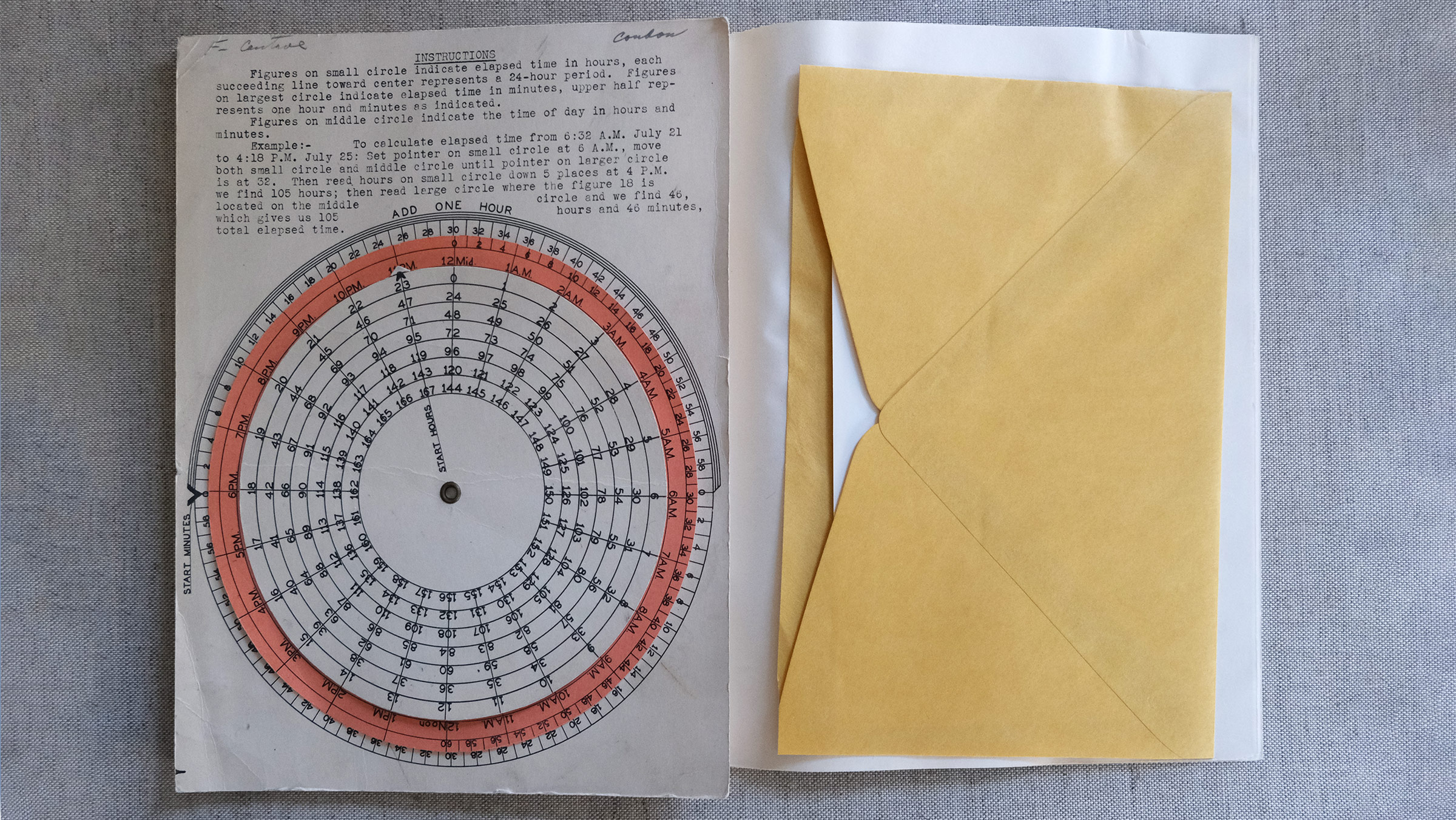
For lack of a better—and more official—term, we are calling this the Fire Weather Wheel of Fate. Its inclusion in a self-guided study course booklet, whose own introduction warns that “Many answers are partly correct” and that “The reader must, therefore, consider the question carefully so as not to choose a partly correct answer rather than the ‘right’ answer,” inherently casts doubt and chaos into the minds of those who lay eyes on it.
Is the wheel a question? Is spinning it a partly correct answer? Which direction does fire weather go? How exactly does time fold into all of this? Is time weather? Is fire weather?
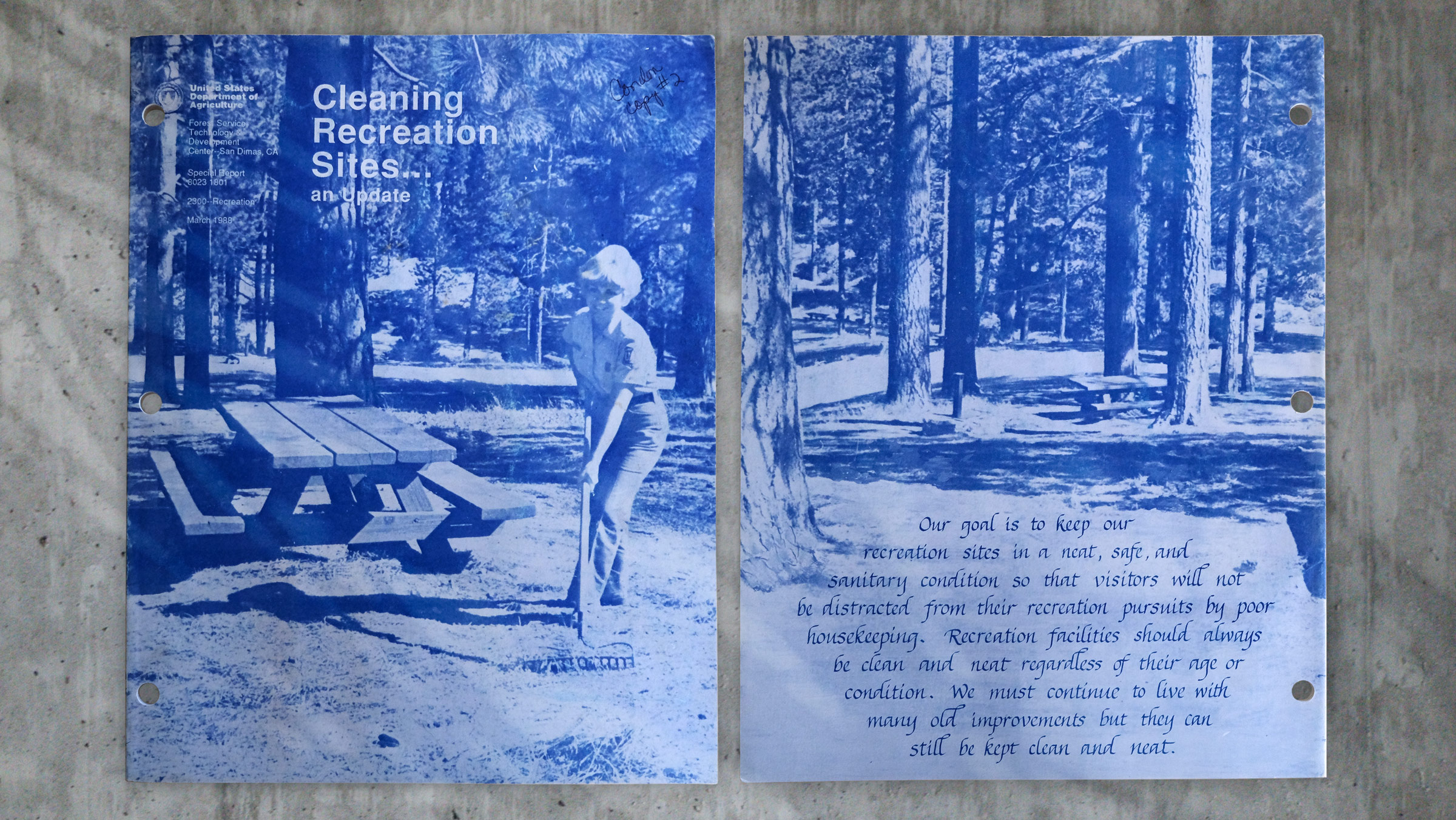
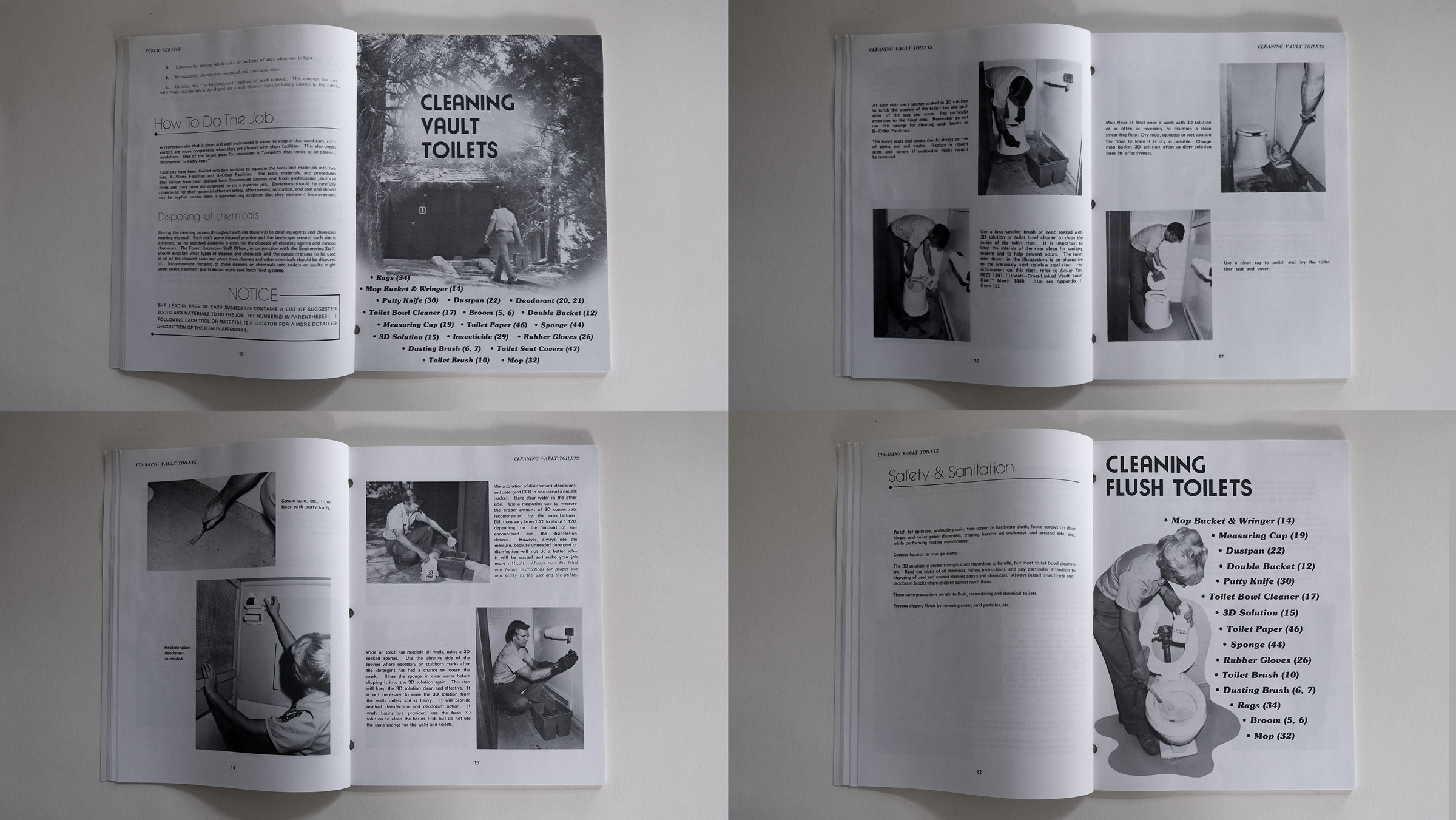
One of the more practical books in the group was the 1988 edition of Cleaning Recreation Sites… an Update. There are still many different varieties of toilets in the whole of the Forest Service purview.

This concludes our look back at the latest tranche of mysterious vintage Forest Service books and pamphlets from the 1960s, ’70s, and ’80s. Some of these can be found online in various digital archives but for the real experience we suggest tracking down originals and giving them a good leafing through. If you or someone you know has 19th century Forest Service manuals and booklets not covered here, please reach out to us at info@departmentofinformation.org or by telephone or fax.